Friday, August 13, 2021

What to Do With Leftover Prescription Pain Pills

What do you do with your leftover pain pills?

America has been in an opioid overdose crisis for more than 10 years. For nearly all that time, the medical community has understood that opioid addiction often starts at home with a legitimate prescription. It is often fueled by the easy availability of leftover painkillers stored in the medicine cabinet, where a patient, teen, child and visitor can access them without controls. 

After my mother-in-law passed away of old age in January 2021, we were faced with a bagful of over-the-counter (OTC) and prescription meds: pills for nausea, headaches and pain, liquid diuretics, bunion ointment, wound care. What to do with this mess! Hospice had given us weeks’ worth of morphine that ultimately was untouched, because my mother-in-was was beyond pain by then. 

We called local pharmacies, police stations and hotlines. Hospice would take back the hospital bed, but not the morphine. In the middle of Queens, New York, we couldn’t find a safe way to dispose of all those meds. Finally, we used cat litter to make gooey messes of all the meds, except the ointments, doing our best to ruin the morphine pills. We tied it up in several plastic bags and tossed them in the garbage, which, unfortunately, means landfill headaches for another generation. 

A couple weeks ago, I attended an FDA/Duke University (Food and Drug Administration) workshop to discuss the safe disposal of opioids in the home. I would love to tell you that research on patient drug-disposal patterns and preferences had been completed and was guiding our discussion. But no. Ten years of terrible addictions breaking up families and killing people, and we, the US, don’t have a plan to prevent the No. 1 problem that starts addictions: in-home access to opioids. 

At the FDA/Duke workshop, speakers presented three pilot community-level programs, each showing some success in getting rid of excess drugs in the home, but not one of them offered more than one disposal option for the patients. And none of them could tie their results to lower addiction or mortality rates in their communities. 

There has been some progress over the past decade. Research has identified healthcare-provider prescribing habits as part of the problem. A decade ago, the average number of pills in one opioid prescription was 40. Education campaigns to increase prescriber awareness have been successful, because now the number of pain pills patients take home is about 20 per prescription. Great start, fewer excess pills. But surplus pills still create opportunities for abuse and addiction.

“The essence of the problem is we have no national disposal program that is co-designed with the end users in mind,” noted Fran Quintero Rawlings of Method Collective, a systems and design consultancy. I spoke with Fran and several other experts and doctors to prepare for the workshop. During the sessions, speakers told us that the only safe way to destroy meds is to incinerate them, which keeps them out of the ecosystem and away from harm. For most people, take-back programs, provided by pharmacies and police stations, are the only path to incineration of the drugs, and they can be very difficult to find. 

So many bad things can happen when excess prescriptions stay in the home. Among the situations are: 

  • you continue taking the drugs longer than your pain justifies,  to unhealthy use, or you take them for a different pain later, which is illegal and dangerous to your health
  • you give them to a family member to help them with pain, which is also illegal and dangerous to their health 
  • children and teens who want to experiment with drugs can get to them, or younger children might eat them, thinking the brightly colored pills and capsules are candy, visitors with substance- use disorders may find and take them, or steal them to sell

All the doctors I spoke with agreed that many people want to keep their leftover pain drugs. Then, the painkillers are available for future problems, like treatment for if an errant toothache wakes them up at 3am, or if their partner or child sprains an ankle on a weekend and needs relief. The fact is, it’s illegal for you to take an oxycontin for pain, if your doctor didn’t prescribe it to you for that condition, or to give an “oxy” to someone else, even your spouse, which a doctor prescribed to you. That’s how dangerous opioids are. 

When the occasional sprain or pain happens, “I would recommend rest, ice, heat and other nonpharmaceutical methods as first-line care, until you can see a healthcare professional. Only add OTC drugs as needed, as there are side effects with Tylenol and NSAIDs as well,” recommends Lillie Rosenthal, DO, doctor of osteopathic medicine, who works with pain patients in New York City and is a member of the MedShadow Medical Advisory Board. 

“Think of them [opioids] like you would a gun,” Kevin L. Zacharoff, MD, Renaissance School of Medicine at Stony Brook University and a MedShadow Medical Advisory Board member, told me. “If you must keep old prescriptions and other dangerous or potentially addictive drugs in your home, get a lockbox or store them in a hidden place. Make sure that your drugs won’t harm other people.” 

Unused Drug Disposal Options

Here’s a rundown of your options for disposing of unused drugs. Remember, the easiest way to limit the drugs in your home is to request fewer pills when your healthcare professional prescribes them. Insist that you want only enough for two or three days. Or use alternatives when possible, like acetaminophen, naproxen, ice, elevation and rest. 

Save, in case needed later: In addition to the risks of drugs in the home, it’s illegal to use your prescription for any pain it was not prescribed for. It’s also illegal to let someone else use a drug prescribed to you. 

Flush down the toilet: This is a last resort. It’s bad for the environment (fish don’t take well to drugs). However, if you have children or others at home with a history of a substance-use disorder and no other way to dispose of them quickly, flushing could save a life. 

Medicine drop-off center: You might find one at a pharmacy or a police station. 

Mix the drugs into cat litter or used coffee grounds: This method is supposed to make the drugs unusable and unable to be snorted or injected. My family soaked my mother-in-law’s pills in water, so they would better adhere to the litter and be harder to clean for later misuse. Unfortunately, they then went into the garbage, which means they went to a landfill and, someday, will leach into our soil and groundwater. 

Mail-back envelope: A pharmacy or pharmaceutical company could provide the envelope, which is a great option for getting them out of the home quickly and safely. 

Destroy: You can buy chemical solutions that will melt the meds and make them unusable. This works, but the sludge you end up with goes into your garbage, which in turn goes into a landfill. Sooner or later, the drugs and chemicals will leach into the ecosystem. 

So what’s the best way? The one that’s available to you. It’s your responsibility to keep drugs prescribed for you safe and then to get rid of them appropriately.

Remember, when unneeded drugs are out of your home, they can’t be used for abuse or cause other harm.

The post What to Do With Leftover Prescription Pain Pills appeared first on MedShadow.


Original post here: What to Do With Leftover Prescription Pain Pills

Thursday, August 12, 2021

Olympic Athletes Excel at Their Sports but are Susceptible to Unproven Alternative Therapies

Australian Olympic swimmer Kyle Chalmers earned a silver medal and his personal-best time in the 100-meter freestyle event at the 2021 Tokyo Games. While most of the world focused on his thrilling performance, others were equally interested in the conspicuous, circular bruises on his back and shoulders. Similar marks were seen on Michael Phelps in 2016 when he added six medals to his tally to cement his title as history’s most successful Olympian.

Those blemishes were the work of cupping, an alternative therapy in which small glass cups are placed on the skin at sites of injury or soreness, and used to create suction that stimulates “energy flow.” One form of cupping – wet cupping – involves piercing the skin to bleed the area and remove stagnant blood and toxins.

As an exercise physiologist who studies critical thinking, I can’t help but wonder how an athlete’s unwitting endorsement of alternative therapy might influence the progression of a sport. This is because cupping is fairly characteristic of alternative therapy that, by definition, hasn’t been accepted by conventional science and medicine. When tested in controlled studies, cupping doesn’t work.

In fact, all alternative therapies exist on a spectrum, from treatments with some merit to scientifically disproven nonsense. And interventions like cupping, that masquerade as science without fulfilling its robust methodology, are known as pseudoscience.

Alternative therapies are rife in sport

When it comes to unproven alternative therapies, cupping is just the tip of the iceberg. Other such practices in sport include chiropractic spinal manipulation, nasal strips, hologram bracelets, oxygen drinks, reiki (healing hands), cryotherapy and kinesiology tape or K-tape.

While an estimated 40% of Americans have used alternative therapies, approximately 20% have used alternative therapies to enhance athletic performance. Studies in amateur and elite athletes show a higher prevalence of 50% to 80%.

A detailed discussion of the evidence – or lack thereof – underpinning each practice can be found in books and scientific journals. However, most alternative therapies generally have three things in common:

1) They’re sold on strong claims and weak evidence.

2) They invoke scientific-sounding terms like “energy,” “metabolites” and “blood flow” to feign scientific legitimacy.

3) They’re based on low-quality studies that are poorly controlled and have small samples sizes. This makes it impossible to distinguish the real benefits of the treatment from perceived or imagined ones.

Why do some athletes love alternative therapies?

Despite scientific consensus on their poor efficacy, alternative therapies appear to be more popular among athletes than the general population. So what makes them so popular?

Humans evolved to take mental shortcuts called heuristics that lead to rapid but imperfect solutions, particularly when making health and fitness decisions. Proponents of some alternative therapies exploit the economy heuristic by offering grand rewards for comparatively little investment. Athletes are always chasing the extra 1% and may be particularly susceptible to extravagant claims.

In some instances, a lack of scientific evidence for a given alternative therapy may be the very reason that someone is drawn to it in the first place. The last decade has seen an upswing in anti-science movements and unprecedented attacks on scientists around the world. An individual may turn to alternative treatments due to dissatisfaction or distrust in conventional science, rejection of societal norms, or both. A therapy may become popular simply because it defies the established order.

Sponsorship is another factor. American athletes only win between $15,000 and $37,500 for an Olympic medal, while British athletes receive no prize money whatsoever. Many have regular jobs, while some earn the bulk of their income from paid advertising. Marketing companies are shrewd: They understand our biases better than we do. A company can increase product sales by sponsoring an athlete and affiliating itself with success, fitness and beauty. It’s a win-win because athletes are able to leverage their hefty social media followings into an advertising base. Seemingly innocuous Instagram posts must not be taken at face value.

Finally, some products like K-tape boost their sales through visibility. This phenomenon, where consumers prefer products they’re more familiar with, is called the exposure effect. Increased visibility leads to increased popularity in an ongoing, reciprocal relationship.

Importantly, none of these factors speak to the effectiveness of a product.

How do alternative therapies benefit athletes?

It’s not all squandered time and money, however, and there are benefits to some alternative therapies. Meditation has been used to successfully improve anxiety, depression and psychological well-being, and yoga is a valid means of weight loss. Moreover, massages and other soft tissue therapies appear to reduce muscle soreness and possibly prevent injury.

A distinction can be made between these and unproven alternative therapies based on the data. Care should be taken not to confound plausible claims like weight loss and relaxation with implausible ones like physical healing and detox.

Even without a quantifiable mechanism of action, many alternative remedies claim efficacy based on placebo effects. The placebo effect manifests when a product improves performance via a positive psychological outcome, attributable to an individual’s belief in the product’s effectiveness. The outcome can be powerful. For instance, one study administered flavored water to competitive cyclists and told them it was a glucose supplement. They saw performance improve by 4% relative to a second group, which was told they’d received a placebo.

In Olympic sport, where gold and silver can be decided by less than a half-second, it’s understandable why sports teams may condone use of placebos, particularly when athletes believe in the powerful effects.

Are there risks of alternative therapies in sport?

The downside is that, yes, there are clear risks associated with certain alternative therapies. For instance, there are numerous reports of serious injury and even death following both chiropractic spinal manipulation and acupuncture. Moreover, skin burns are a common side effect of cupping therapy.

Of course, all medical procedures carry risk. But in conventional medicine, physicians make treatment decisions based on a risk-to-benefit ratio. When the benefit of alternative therapy hinges on a placebo, the potential risks become hard to justify, especially given the possible loss of training time due to injury or other negative outcome that results from an alternative treatment.

The broad and indiscriminate use of alternative therapies in sport may also have downstream consequences for clinical practice. This is because it’s impossible to restrict placebo use only to minor ailments and sports performance. A sincere belief in the effectiveness of an alternative therapy that isn’t backed by science will lead to its inevitable use by some individuals to treat a potentially serious condition, sometimes with fatal consequences.

Is there a place for alternative therapy?

Might alternative treatments complement those endorsed by science? Perhaps. But safe practice requires drawing a clear line in the sand to restrict alternative therapies to minor ailments and sports performance, not replace modern medicine.

Pseudoscience is a major barrier to both evidence-based practice and science education and literacy. That’s why it’s a potential burden in sport, and why education programs are needed to help people distinguish science from pseudoscience. Not just in sport, but in all facets of society.

And despite what you may hear in Olympics coverage, lactic acid does not cause fatigue.The Conversation

Nicholas B. Tiller, Research Fellow (exercise physiology/respiratory medicine), University of California, Los Angeles

This article is republished from The Conversation under a Creative Commons license. Read the original article.

The post Olympic Athletes Excel at Their Sports but are Susceptible to Unproven Alternative Therapies appeared first on MedShadow.


Original post here: Olympic Athletes Excel at Their Sports but are Susceptible to Unproven Alternative Therapies

Wednesday, August 11, 2021

How Wildfires Affect Your Health

Around the country this July, the skies grew hazy and the sun burned red, as the smoke of wildfires from California to Canada blew across North America. A TikToker from Utah, @mandeemo_4045, has shown the dramatic effect of the haze in her state.


@mandeemoe_4045#wildfire #smoky #utah #airqualityalert #fyp #oregonfire #gross♬ Fast – Sueco the Child

Another, @world_gone_wild, shared a series of harrowing scenes from the East Coast. 

@world_gone_wild#wildifre #connecticut #connecticutcheck #connecticutlife #massachusetts #maine #newengland #hazy #hazytiktok #wildfiresmoke #tennessee #redsun #haze♬ Smoke on the Water (2017 Remaster) – Deep Purple


As wildfires blanket the US  with smoke each year, health experts encourage taking extra precautions to reduce your exposure to pollutants caused by wildfires and other substances. On August 9, The UN released the Sixth Assessment Report, Climate Change 2021: The Physical Science Basis, which spelled out that scientists expect climate change effects to worsen  over the next 20 years.

One TikToker in New York, @ZeroWasteCreative, explained that she was wearing an N95 mask, while out buying more masks to protect herself from smoke particles.

@zerowastecreativeUnhealthy AQI is 50 and up. Yesterday we were chillin’ in the 170 range. #ClimateChange #Wildfire #NYC DontQuitYourDaydream #TikTokFanFest #Wellness♬ All Eyes On Me – Bo Burnham


This image below, from the National Oceanic and Atmospheric Administration (NOAA), shows wildfire smoke being blow East away from fires in the West, back in June 2021. 

Smoke Fills the Sky Below the GOES East Satellite

To see a real-time, interactive prediction of wildfire smoke’s movement, click here

Wildfire smoke contains small particles similar to those found in other polluted air, which  wreaks havoc on your body when you breathe them in. These particles are  thought to trigger inflammation and oxidative damage, while worsening common heart and lung conditions. A study in Nature Communications suggested that wildfire smoke is even worse for health than pollution from other sources like traffic exhaust fumes, because it has caused higher hospitalization rates.

 Short-Term Wildfire Smoke Exposure Symptoms

Wildfire smoke primarily affects the respiratory system, heart, eyes and skin. Some symptoms you may notice when the air quality is low are:

Skin irritation

Itchy eyes

Scratchy throat

Trouble breathing

Coughing

Runny nose

Faster heart rate

Fatigue

Headaches

Little is known about how smoke interacts with medications. But be aware that many medicines can cause or increase some of the symptoms listed above. If you’re taking a drug that causes respiratory, dermatological or cardiovascular side effects, you might consider taking extra precautions to avoid triggering or increasing those symptoms. For example, eggs, soy, wheat and shellfish can trigger asthma in some people (See Lifestyle Changes and Asthma).

Be sure to check out your prescriptions and over-the-counter (OTC) cold medicines because many drugs, including cold medicines and corticosteroids, can aggravate high blood pressure, among other conditions. 

People at the highest risk are those with:

COPD (chronic obstructive pulmonary disease)

Asthma

Heart disease

and

Children

Pregnant women

Firefighters or other first responders with high regular exposures to air pollutants

To elaborate on what we know and how to reduce exposure, MedShadow spoke with Rob Scot McConnell, MD, a physician and environmental epidemiologist at the Keck School of Medicine, who has studied the effects of wildfire smoke on health.

MedShadow: How can wildfire smoke cause health problems? What’s in it?

McConnell: There’s 50 years of research showing that particles in the air are bad for us in many, many ways. We know that when [there are] wildfires, you get astronomical levels of these particles in the air. It increases mortality. It’s damaging to the heart and to the lungs and may increase asthma in children. It just has a huge burden on morbidity and mortality.

[Editor’s note: particles, which come from wildfire smoke as well as other sources of air pollution from cars and trucks, are small enough to enter the lungs and bloodstream and then damage your body.] 

MedShadow: How does wildfire smoke differ from other air pollution sources, like car exhaust fumes? 

McConnell: Wildfires are a wild card, so to speak, because they show up unexpectedly. They produce huge amounts of particles. The toxic effects of them are not as well studied as particles from industrial or vehicular sources. And it can be quite a toxic mix. It’s [from] wood and chaparral [leaves and vegetation] and biomass burning, but it also runs through communities and burns up plastics and automobiles. A lot of modern products produce a lot of toxins, if they aren’t meant to be burned. 

MedShadow: How can those particles affect your health during a wildfire?

McConnell: There are both acute and chronic effects. The acute effects are that people are more likely to die on really high air-pollution days. You see increased mortality in the days of, and on days a week or so after a heavy exposure. It particularly affects the people who are older or who have underlying diseases: chronic lung disease, heart disease or children with asthma. Children with asthma generally don’t die, but they get asthma exacerbations. You see increased hospitalization and clinic visits. It [creates] a big burden on the healthcare system.

MedShadow: How can the particles affect your long-term health?

McConnell: Every year now in California, we’re getting big fires and we have several weeks of quite high levels [of air pollutants]. So then you need to worry about the chronic effects. There’s good evidence that these chronic levels produce lung disease and heart disease, and they may cause asthma. 

We know that [the high levels of air pollutants] reduce lung function. We’ve done a lot of studies looking at lung function in children. And we see that the growth of the function of lungs is slower in children who live in high-pollut[ion] communities. As an adult, if your lung function gets low enough, it’s one of the biggest predictors of mortality. 

There’s actually an emerging body of evidence indicating that particles are also bad for the brain. There are effects on the brain, sort of neuroperformance and brain structure that you can see in adolescents. And in the aging, you see accelerated decline and increased incidence of dementia, or Alzheimer’s disease, in people who live in more polluted communities.

MedShadow: How can we reduce our risk of exposure?

McConnell: I’m always very cautious in what I advise people about exercise, because there’s so much evidence that exercise is really good for you. But in the context of a really high and relatively short-term particle exposure, it makes sense to reduce your exercise. The reason is that even a moderate level of exercise increases by fivefold your ventilation rate — the amount of air that you pull in. And so that increases the dose of particles to your lung by fivefold.

There’s increasing evidence that room air purifiers with high-efficiency air filters, can markedly reduce the levels of particle exposures indoors. Two years ago, we bought a couple of air purifiers. I bought one for a little exercise room with a treadmill, so on polluted days, that’s where I exercise.

MedShadow: What should we look for when  buying an air purifier?

McConnell: You have to be sure to use a high-efficiency particulate filter [in your purifier]. Some of these air purifiers use ozone to trap particles. You don’t want to use a particle filter with ozone [because while they remove some particulate matter, those add other pollutants to the air.]

Editor’s note: This interview has been edited for clarity and length.

The post How Wildfires Affect Your Health appeared first on MedShadow.


Original post here: How Wildfires Affect Your Health

Friday, August 6, 2021

25-Year-Long Study of Black Women Links Frequent Use of Lye-Based Hair Relaxers to a Higher Risk of Breast Cancer

The Research Brief is a short take about interesting academic work.

The Big Idea

Frequent and long-term use of lye-based hair straightening products, or relaxers, may increase the risk of breast cancer among Black women, compared with more moderate use.

Boston University’s Black Women’s Health Study followed 59,000 self-identified African American women for over 25 years, sending questionnaires every two years on new diagnoses and factors that might influence their health.

Using these data in our own study, my team of epidemiologists and I found that Black women who used hair products containing lye at least seven times a year for 15 or more years had an approximately 30% increased risk of estrogen receptor positive breast cancer compared with more infrequent users.

The minimal association between hair relaxers (with or without lye) and breast cancer risk for moderate users is generally reassuring. But the elevated risk for the heaviest users of lye-based hair products – which included about 20% of study participants – is concerning.

Why It Matters

There is an urgent need to address racial disparities in breast cancer.

Black women diagnosed with breast cancer are 40% more likely to die from the disease than white women. While systemic factors such as delays in diagnosis and poorer health care likely contribute to this disparity, they don’t seem to fully explain the survival gap between Black and white women.

Black women are more likely than white women to develop highly aggressive breast cancers that have higher mortality rates, but researchers don’t really know why. However, scientists do know that chemical hair relaxers, more often used by Black women, contain potentially harmful chemicals, including possible carcinogens and chemicals known as endocrine disrupters, which can interfere with hormone function and could raise breast cancer risk. In the Black Women’s Health Study, 95% of women reported past or current use of these products.

This study fills a knowledge gap on the potential health effects of a consumer product popular among Black women. Given these findings, women may want to be cautious about the types of personal-care products they choose.

What Still Isn’t Known

Because the Black Women’s Health Study did not have information on specific brands of hair relaxers, my team and I could not determine which specific ingredients might be most relevant for breast cancer risk. In addition, because we asked about hair relaxer use before 1997, the results of this study may not apply to products on the market today.

Though our findings suggest a link between the use of certain types of hair relaxers and breast cancer, epidemiologic studies such as this one cannot definitively prove that hair relaxers cause breast cancer. Additional research is needed, especially on currently available products.

What Other Research Is Being Done

Evidence from animal and other experimental studies support a possible link between chemicals included in hair relaxers and cancer development. Studies on hair relaxer use and breast cancer risk in people, however, have had inconsistent results, possibly because of differences in the types of products used or asked about.

What’s Next

Thanks to 59,000 study participants in the Black Women’s Health Study, our research team continues to investigate risk factors for breast cancer and other diseases in Black women. By understanding what causes disease and learning about ways to lower risk, society can move one step closer toward eliminating health disparities.

[Like what you’ve read? Want more? Sign up for The Conversation’s daily newsletter.]The Conversation

Kimberly Bertrand, Assistant Professor of Medicine, Boston University

This article is republished from The Conversation under a Creative Commons license. Read the original article.

The post 25-Year-Long Study of Black Women Links Frequent Use of Lye-Based Hair Relaxers to a Higher Risk of Breast Cancer appeared first on MedShadow.


Original post here: 25-Year-Long Study of Black Women Links Frequent Use of Lye-Based Hair Relaxers to a Higher Risk of Breast Cancer

Thursday, August 5, 2021

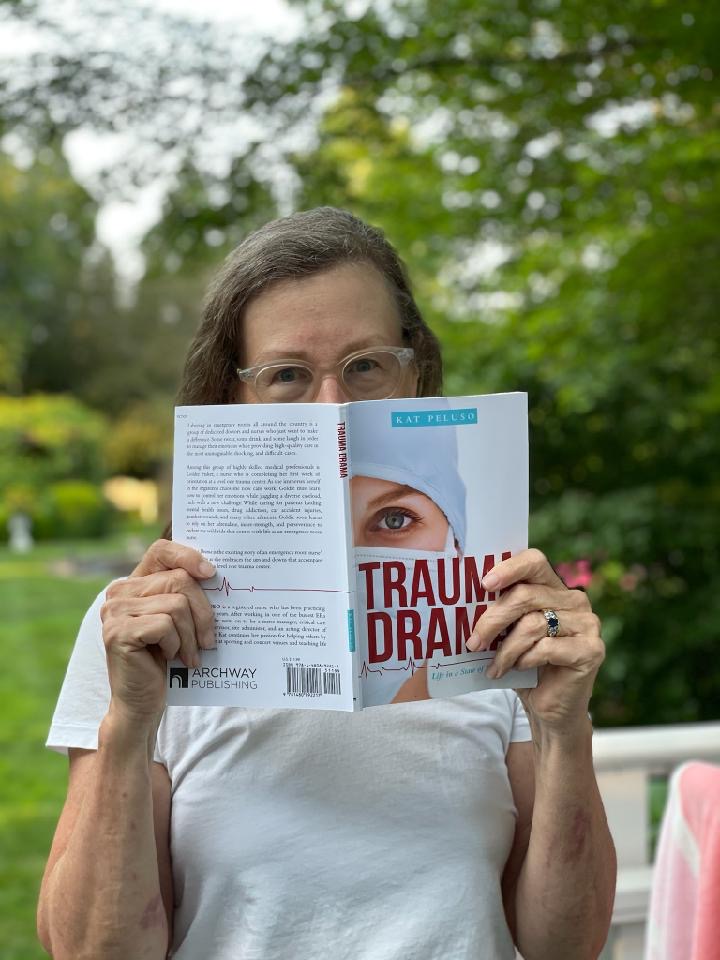
Trauma Drama: A Bright, Lively Read

Trauma Drama is Kat Peloso’s novelization of nurse Goldie’s first few weeks transitioning into the emergency room (ER) after a decade of being an operating room nurse. Each chapter recounts another hair-raising story based on the controlled mayhem in the ER of a Level One trauma center. Not surprisingly, it reads like a memoir, because Peloso was once an ER nurse. The novel starts with a disclaimer that the names and other details have been changed to protect identities.

Goldie’s enthusiasm for this cesspool of gunshots, overdoses and dangerously angry patients is at first hard to believe. Her response when she learns she’ll be trained in how to preserve forensic evidence when dealing with trauma and sexual assault? “Wow, I can’t wait.” Yet I ultimately do believe the sentiment, because Peloso convincingly conveys Goldie’s enjoyment of her work’s adrenaline rush.

In the trauma center, everyone on the medical team gets along. The doctors are “awe-inspiring,” and a nurse who appears to be a “hard-ass, but here she is so loving and caring…” The humor reminds me of the 1970s TV show, M*A*S*H. In the novel, a young adult, beaten outside a nightclub, has a salami taped to the inside of his thigh to create a very long bulge. An assisting nurse’s response? “I guess we know why he was beaten.“ Chuckles all around.  

There’s a lot to be said for a novel that can maintain humor and optimism in an ER. The page before the bulge incident, a drug dealer was spitting at the doctor and cursing Goldie, while having drugs pulled from his rectum. The stories roll into each other reflecting the fast pace and the incredible variety of health situations the ER staff has to deal with. Despite the deeply serious nature of ER care, Trauma Drama is a bright, lively, fun read.

Peluso, Kat, (2020),Trauma Drama: Life in a State of Emergency, Archway, ISBN-13 : 978-1480892217

The post Trauma Drama: A Bright, Lively Read appeared first on MedShadow.


Original post here: Trauma Drama: A Bright, Lively Read

Monday, August 2, 2021

Decongestant Eye Drops Can Be Deadly

In June, police announced surprising charges in a nearly three-year-old murder case: the victim’s friend had poisoned her with eye drops. This is far from the first time the seemingly innocuous over-the-counter (OTC) medication Visine and its ilk have been used to inflict harm. In 2020, a woman was sentenced to 25 years in jail after using the same toxin to kill her husband. And the stories go back, too. A 2013 article in Wired starts by rattling off a series of criminal cases involving the liquid sold in a tiny bottle that can be poisonous, if used the wrong way. 

How Visine Works 

The drops the killers used in these scenarios are designed to transform red, bloodshot eyes into clear, whiter eyes by reducing the size of the blood vessels that inhabit them. Visine Original Red Eye Drops, which is a decongestant, constricts your blood vessels. As the blood vessels tighten, there’s more white and less red in your eyes, but if the drug is ingested, its active ingredient, the chemical tetrahydrozoline, can shrink blood vessels throughout your body, causing shortness of breath, seizures, coma, and even death.

Causes of Irritated Eyes

Dilated blood vessels aren’t the only cause of irritated eyes. For that reason, some doctors worry that the OTC drops used by many of their patients can do more harm than good.

“Ask any eye doctor. Visine is the most hated eye drop used by patients,” says Dagny Zhu, an ophthalmologist and cornea, cataract and refractive surgeon, at Hyperspeed LASIK | NVISION Eye Centers in Rowland Heights, Calif. “The problem is that a red eye can often be a sign of a dangerous underlying condition, like an infection or inflammatory disease. Using Visine only masks the problem. And delayed treatment can lead to vision loss.”

You may have red, itchy or dry eyes for many different reasons, including:

Allergies

Dry air

Infection

Smoke

Lack of sleep

Crying

Dehydration

Marijuana use

Glaucoma

Too much screen time


Eye irritation can also be a side effect of the following drugs:

Antidepressants

Antihistamines

Decongestants

Blood pressure medications

Acne medication Accutane 

In many cases, you may be able to treat irritated eyes with a little extra sleep or by closing them and resting cool cucumber slices or refrigerated spoons on top of them for a few minutes. Applying these items can gently cool and soothe your eyes, reducing redness and swelling. Avoid using heavy items or applying pressure, which can increase irritation. You can also use a humidifier to moisturize eyes. 

Not all eye drops – even OTCs, available without a prescription – are created equal. Some target redness and dryness, while others contain compounds that treat allergies or bacterial infections.

Artificial Tears

Artificial tears supplement the natural lubrication your eyes produce. The American Academy of Ophthalmologists suggests trying these products to reduce redness before you consider a decongestant like Visine Dry Eye Tired Eye Lubricant Eye Drops, or Bion Tears Eye Drops. If they help, but you find yourself using them regularly, switch to a “preservative-free” solution, like Bausch & Lomb Soothe Long Lasting (Preservative Free) Eye Drops, because over time, preservatives can irritate your eyes.

Decongestants

Drugs like Visine Original Red Eye Drops or Clear Eyes Redness Relief constrict the blood vessels to reduce redness. For that reason, you shouldn’t use them for more than 72 hours. Doctors warn that if you apply the drops continuously, you may experience a “rebound effect” of worsening redness and itch when you stop the treatment. If you have glaucoma, which damages the optic nerve and disrupts vision, these drops can also cause acute angle-closure glaucoma, a condition that may lead to severe headaches, blurred vision and pain. If you experience these symptoms, seek emergency care right away.

Antihistamines

Some drops, such as Pataday products and Zyrtec Itchy Eye Drops, contain antihistamines, a type of drug used to treat eye irritation – especially itching — triggered by allergies. Some decongestant eye drops also contain antihistamines.

Antibacterial

You need a prescription for antibacterial drops, if you have an infection like pink eye, also called conjunctivitis.

Pressure-Relieving Drops

These drops are another prescription-only option used to reduce pressure in the eye caused by glaucoma.

Side Effects of Eye Drops

If you use eye drops as directed, in limited amounts and only in your eyes, they are unlikely to result in dire consequences, like shortness of breath, seizures, coma, and even death. They can, however, lead to myriad side effects and mask issues that require medical treatment.

While only the decongestant drops will constrict your blood vessels and cause the famously poisonous reaction if injected, any eye drops can cause “blurry vision, dilated pupils, watery eyes or mild burning and stinging,” says Chris Airey MD, a physician with Optimale and the National Health Service (NHS).

Like many drugs, eye drops can trigger allergic reactions, such as swelling, rashes, dizziness and difficulty breathing. If you experience any of these symptoms, seek emergency care immediately.  

The post Decongestant Eye Drops Can Be Deadly appeared first on MedShadow.


Original post here: Decongestant Eye Drops Can Be Deadly

An Expert Guide to Safer, Smarter, Supplement Use

On May 13th, MedShadow is hosting a live webinar with an integrative psychiatrist and a clinical pharmacist to answer the questions most sup...