Wednesday, March 30, 2022

To Be One in a Million: ‘Who Thinks It’s Going to Be You?’

BEND, Ore. — Monica Melkonian wanted the Johnson & Johnson covid vaccine. It was only one shot and then she would be protected against the virus. So she was thrilled when the vaccination clinic at the Deschutes County Fair & Expo Center on April 7 had her first choice.

But on April 13, Melkonian started experiencing headaches, a sharp pain behind her left eye. That same day federal health officials announced a pause in the use of the J&J vaccine after learning that six people had developed a rare blood-clotting disorder following their shots.

Despite her ongoing headaches, she and her husband, Stan Thomas, spent the next Saturday working around their home. He hung a ceiling fan in their garage where he works on motorcycles. She spent the day pulling weeds. They walked their lot identifying the projects they wanted to complete that summer. Late into the evening, they soaked in their hot tub, drinking champagne and margaritas, eating strawberry shortcake. They watched the moon rise and the stars come out in the dark Central Oregon sky.

“We were literally talking about how amazing our lives have been and how lucky we were,” Thomas said.

Less than a week later, she was dead.

The 52-year-old woman is one of only nine people in the U.S. known to have died from vaccine-induced thrombotic thrombocytopenia, a rare side effect of the J&J vaccine, and a victim of tragic timing. Thomas believes his wife would be alive today had the information about potential side effects been shared even a few days earlier. Instead, he is left to tell her story and protect her legacy.

Both were experts in the field of occupational health and safety and directly involved with the pandemic response. Both knew a one-in-a-million risk of the covid vaccines paled in comparison with the risks of the virus itself. And while Thomas remains steadfastly pro-vaccine and bristles at the idea of the anti-vaccine movement capitalizing on his wife’s death, he questions whether health authorities have done enough to help people understand their vaccination options.

According to data compiled by the Centers for Disease Control and Prevention, women between ages 30 and 49 appear to be at highest risk for the complication that killed Melkonian. Federal health officials now recommend everyone take the Pfizer or Moderna mRNA vaccines instead. They’ve left the J&J vaccine on the market to avoid undermining confidence in a vaccine that will likely play a crucial role in bringing the global pandemic to an end.

It’s a decision that Melkonian’s death helped illuminate. Her case was presented to the experts who made that recommendation.

Now Thomas is fighting to ensure her sacrifice is not forgotten. It’s easy to lose sight of the humanity hidden in the statistics of risk.

“When it’s 8 million doses and two people are going to die from it,” he said, “who thinks it’s going to be you?”

‘This Isn’t Happening!’

Melkonian and Thomas had met while working as fatality investigators for the Oregon Occupational Health and Safety department. He had been her mentor in 1996, overseeing her first inspections. After their respective marriages ended, their friendship turned to romance, and they got married in 2007. When covid hit, their jobs centered on the pandemic. Thomas oversaw planning for Oregon’s nonmedical response, while Melkonian worked for a software company that helped companies track vaccinations.

“From day one, the pandemic was part of this household,” Thomas said. “There was no escaping it.”

They talked frequently about the coming covid vaccines and the differences among them. They recognized that all three were safe and effective, and that the possibility of a bad side effect was minimal. He wanted mRNA vaccines. She wanted to be protected as soon as possible, and the one-dose J&J vaccine seemed it would accomplish that faster.

“You definitely hit the jackpot,” Thomas recalled telling her after she got her shot. “You should go buy a lottery ticket, because today’s your lucky day.”

It turns out it was a lottery no one wants to win. The chance of a woman her age dying from the shot was literally 1 in 1 million.

“A month later, we realized once that needle hit her arm, it was a one-way ticket to here,” Thomas said.

On that day working around their home, her headaches had mostly gone. They went to bed basking in the warmth of their perfect day. But at 4 a.m. the next day, April 18, Thomas heard Melkonian cry out and hit the floor. She had experienced a seizure and couldn’t move her right arm. Thomas suspected a stroke and immediately thought of the vaccine.

“No! This isn’t happening to me,” Melkonian cried out as Thomas spoke with the 911 operator.

As they waited for the ambulance, they used those precious minutes to tell each other the kinds of things you say when you don’t know what the future will hold. By the time the ambulance arrived, she could no longer speak.

“The progression of this was just lightning-fast,” Thomas said, “which I am tragically grateful for.”

At the St. Charles Bend emergency room, Thomas told her to squeeze his hand once for yes and twice for no, as doctors asked her questions.

“The last thing that I said to her was that I loved her and asked her to squeeze my hand twice,” Thomas said. “She did.”

They rolled her out of the room to get a CT scan, and when she returned, she couldn’t respond in any way.

Quick Progression

Dr. Scott Rewinkel, a neurologist who specializes in clinically complex patients at the hospital, was paged about a seizure patient. He reviewed Melkonian’s CT scan. She had experienced several brain bleeds on the left side of her frontal lobe.

“And that’s an unusual spot for somebody her age and her general health,” he said.

Just days earlier, Rewinkel and his neurology colleagues at the hospital had discussed guidelines for identifying and treating the very condition that had struck Melkonian. It’s a paradoxical condition in which the immune system destroys the platelets needed for clotting, while leading to blood clots in the venous sinuses of the brain. The patient experiences clotting and bleeding at the same time.

Thomas thought if he could just get his wife home, she’d be all right.

“That was my hope: Get her back, and then therapy and everything, and we can still go have fun and live our lives,” Thomas said. “By Sunday night, that hope was gone.”

Despite doing everything called for in the treatment guidelines, doctors were struck by how quickly her condition deteriorated. Every successive CT scan showed the bleeding spreading over more of her brain. There was one last-ditch effort they could try. They could open her skull to allow the brain to swell outside its fixed confines. But her brain had already been so damaged, she likely would have faced significant disabilities. The bleeds had hit areas of the brain associated with language and personality.

“Who am I getting back?” Thomas recalled asking the doctor as they weighed the procedure. “What I’m getting back is somebody that’s going to be sitting in a wheelchair with drool running down her stomach, not knowing what she’s looking at off the deck.”

Helping Others

The doctors estimated that without further intervention Melkonian would die by the end of the week. Thomas told them to take any blood or tissue samples, to run any tests that might help doctors understand why the J&J vaccine was causing this side effect or how to reverse it.

“The body is a vessel for the soul, and the soul is gone. So get what you can,” Thomas said he told them.

On the afternoon of April 20, some 200 doctors, nurses, and other staffers lined the hospital hallway as they pushed Melkonian on her final journey. Thomas, along with her son and her brother, walked behind them. Then they went outside the hospital, lowered the American flag, and raised the Donate Life flag beneath it, while inside doctors removed her organs. Her liver and right kidney went to a 40-year-old man, her left kidney to a 50-year-old man, her heart to a 40-year-old man.

Three days later, a CDC advisory council reviewed the data on the J&J vaccine and recommended lifting the 10-day pause. The committee members felt taking one of the approved vaccines off the market would hamper vaccination efforts, and that the one-dose vaccine offered important benefits for people who might be difficult to bring back for a second shot, or for places where the super-cold storage required for the mRNA vaccines might not be available.

Then the FDA updated its fact sheet on the vaccine, advising women under 50 of the potential side effect. Rewinkel had presented Melkonian’s case so it could be included in the analysis.

“The big takeaway is that the risk is very, very small,” Rewinkel said. “It’s simply a game of statistics and numbers.”

The odds of having a complication from a covid vaccine, he said, are incredibly small compared with the risks of the virus.

In December, the committee reviewed updated data on the J&J vaccine through August 2021. After more than 14 million doses were administered, 54 total cases of the clotting disorder had resulted in eight deaths. That’s 0.00006%. The U.S. case fatality rate for covid is 1.2%. A ninth clotting death occurred but doesn’t change the death rate measurably.

The committee considered whether the now ample supply of the mRNA vaccines meant the J&J vaccine could be pulled, but decided to leave it in place. Instead, the panel recommended the mRNA vaccines over the J&J shot. The J&J shots are still being given and more than 18 million shots have been administered in the U.S.

‘A Hero of the Times’

Thomas inquired about a Federal Emergency Management Agency program to help with burial costs for people who died of covid but was told his wife was not eligible because her death certificate didn’t list covid as the cause of death. To Thomas, such rules seem to ignore her death as part of the full toll of pandemic fatalities.

“She’s a hero of the times that we’re living in, in this pandemic, in this world which we are faced with today,” he said, “for the legacy of the work she did, and doing her societal obligations, and giving her life for it.”

Thomas is also upset that the risks of the various vaccines weren’t communicated earlier and more clearly.

“They’re not taking time to explain the acceptable risk,” he said. “They’re not taking time to communicate what shots are good for what age groups.

Maybe officials didn’t know of the risk before Melkonian got her shot — rare side effects often emerge only when a vaccine is administered to large numbers of people. In the clinical trials of the J&J vaccine, one person developed that side effect and survived.

Thomas would have preferred a more nuanced public health message, explaining the differences among the vaccines and how women ages 30 to 49 were at higher risk of complications from the J&J vaccine. Although Melkonian was a few years older than that range, her husband feels she would have heeded such a warning.

“It was an absolute failure to some degree,” he said. “The fear of scaring everybody away from the vaccines overran the ability to educate the public correctly.”

A couple of weeks after Melkonian died, Thomas still hadn’t been vaccinated. He called up a friend who was helping to run the county’s vaccine clinic. He knew her from years of working with Deschutes County Search and Rescue.

“I can’t go get a shot where Monica got her shot,” he said he told her. “I can’t go in there.”

She arranged for him to get his first vaccination shot at the search-and-rescue team’s building. Several friends showed up to support him. One made breakfast. They did their best to keep his mind off the circumstances, but his mind was awash with conflicting thoughts.

“My wife, my best friend, my soulmate is dead because of what’s happening to me right now,” he recalled thinking. “I know people are going to look at me and go, ‘You’re an idiot!’”

He figured people would second-guess his decision to get vaccinated after her death. “I’ve got friends that refuse to get a shot and they’re losing their job because they don’t want to get a shot. And they’re like, ‘But look what happened to Monica,’” he said. “They use her as justification.”

However, he said, he still believes in covid vaccines — and that his choice was made before his wife died. He is now among the more than 200 million Americans vaccinated against covid.

The post To Be One in a Million: ‘Who Thinks It’s Going to Be You?’ appeared first on MedShadow Foundation.


Original post here: To Be One in a Million: ‘Who Thinks It’s Going to Be You?’

 From Fatigued to Fantastic, Energizing for Everyone


As a patient and advocate for the fibromyalgia and chronic fatigue community, I’m familiar with Dr. Jacob Teitelbaum’s work. His writings on chronic fatigue syndrome are very well-known to many people in the health field. However, this was my first time reading From Fatigued to Fantastic (4th edition) and I found this book to be filled with great advice for nearly everyone. 

The book is big, topping out at 400 pages, but don’t be deterred! Instead, follow Dr. Teitelbaum’s own  advice and pick and choose your topic of interest rather than read the book in its entirety; it can be overwhelming! While I read it twice because I was reviewing it, had it been simply to get advice for my conditions I would have chosen the chapters that were relevant to my own health. Dr. Teitelbaum does an excellent job at separating your symptoms and creating a path towards recovery. The book dives straight into “here is what to do for X condition,” but the science side of me was asking myself “but why?” quite often. Both the BFF (Brain Fog Friendly) Summaries and quizzes help readers navigate the science with easy to understand summaries and targeted information. 

Another great way to orient oneself in this big but great book is to start with the last chapter of the book and the Appendix, written by Dr. Samuel F. Yanuck. It contains information that frame-worked the entire book and helped me understand why Dr. Teitelbaum was recommending particular remedies. 

Finally, as a patient who has already completed a majority of the SHINE protocol (Sleep, Hormones, Immunity/Infections, Nutrition, and Exercise as able), I found success in Dr. Teitelbaum’s SHINE suggestions. By implementing the ideas in the book I have found improvements during the time it took me to read the book twice! This book challenged me to rethink my health and helped me identify gaps in my self-care for my conditions. From Fatigued to Fantastic lands in my top three recommendations for everyone who is serious about getting back their health and life, not just for the FM/CFS community!

Sabrina Everhart

Patient Representative, FDA

Advocate, Leaders Against Pain Action Network

Monday, March 28, 2022

How Do You Know Which Diabetes Drug Is Best for You?

Diabetes symptoms can be so mild that many people don’t even know they have it. Those who are diagnosed may stop taking their pills, because they find the side effects worse than disease’s limited symptoms. But it’s important to take this disease seriously because over time untreated or poorly treated diabetes can cause severe and irreversible complications like kidney, eye, and nerve damage or infections that lead to amputations.

This article focuses on the pros and cons of the oral type 2 diabetes drugs. Almost all people with type 2 diabetes are candidates for one or more of these medicines — but with so many kinds of diabetes drugs on the market, the choice can be difficult and confusing (even for doctors). A list is available here; click on the “medication basics” tab.

Why Diabetes Is So Bad

The Good News

Proper treatment can keep people with diabetes healthy. People with diabetes who receive good and consistent care can live a normal life.

The aim of treatment, with both lifestyle changes and medications, is to lower your blood sugar (as represented by your hemoglobin A1c level, also called HbA1c) and keep it at a healthy level, reduce symptoms, and reduce the risk of diabetes complications.

Managing diabetes is complex, but studies are now quite clear: Lifestyle changes matter and even small changes — such as losing 5% to 10% of your weight or exercising just 20 to 30 minutes every day — can help. Both yield solid benefits, and enable some people with diabetes to stop taking their medicines. A 2019 study published in Diabetic Medicine found that when people with type 2 diabetes lose 10% or more of their body weight in the first year after diagnosis, they double the likelihood that they’ll be in remission in five years. And in a joint statement based on high-quality studies, the American College of Sports Medicine and the American Diabetes Association note that 150 minutes of exercise per week positively affects lipids, blood pressure, cardiovascular events, mortality, and quality of life in people with type 2 diabetes.

Types of Diabetes Meds

Diabetes medicines work in quite different ways. But all of them lower blood sugar, help improve the body’s use of glucose, and decrease symptoms.

None of these drugs are problem-free; all can fail to control blood sugar adequately over time in some people who are given them. As a result, the different types of drugs are often used in combination. There are a number of combination products that combine two glucose-lowering medications into one pill. And in the last two years the FDA (Food and Drug Administration) has approved two triple combination pills, Qternmet XR and Trijardy XR, each combining a dipeptidyl peptidase-4 (DPP-4) inhibitor, a sodium-glucose co-transporter-2 (SGLT-2) inhibitor, and metformin. Your doctor may switch you from one type of drug to another and, if diabetes progresses, you may eventually need insulin to control your blood sugar.

Side Effects and Safety

Side effects are a serious problem with diabetes medicines. They vary from drug class to drug class and medicine to medicine, even within the same drug class. 

Since many people with diabetes are trying to lose weight, the weight gain that can occur with some drugs can be especially frustrating. Here’s an overall assessment:

Common Side Effects

  • Weight gain
  • Gastrointestinal side effects (abdominal pain, nausea, vomiting, diarrhea, gassiness and bloating)
  • Edema (fluid in legs and ankles)
  • Upper respiratory tract infections
  • Headache
  • Hypoglycemia or low blood sugar (usually minor if caught early; untreated can become severe, causing hunger, profuse sweating, tremor, shakiness, dizziness, mental confusion, coma, and risk of death)

Uncommon

Rare

  • Lactic acidosis (buildup of lactic acid in the blood)
  • Eye problems
  • Liver disease/liver failure
  • Pancreatitis (inflamed pancreas)

Overall Pros and Cons

With the very important caveat that studies do not reveal how a specific person will respond to any particular diabetes drug, our evaluation leads to the following overall conclusions:

Metformin is a good initial choice for most people. However, an article in the journal, Diabetes, Obesity and Metabolism, reports that 30% of diabetic patients who are prescribed metformin eventually stop taking the medication. The research team attributes the falloff in compliance to  gastrointestinal side effects. In a study conducted at the McGill University in Montreal, researchers found that Metformin potentially increases the risk of low thyroid-stimulating hormone level in patients with underactive thyroids (hyperthyroidism). 

In a study published on March 28, 2022, researchers found that men who took metformin while their sperm developed were more likely than their healthy counterparts to have babies with birth defects, especially genital defects in males. The same risk wasn’t seen in men who took insulin, and the study did not include enough men using sulfonylureas to determine whether those drugs increased the risk of birth defects. You may want to talk to your doctor about switching medications before trying to conceive.

Maarten Wensink, MD, PhD, a corresponding author on the study tells MedShadow, “The most important take-away for me is that we should take paternal contributions to offspring health seriously. . .The best treatment for type II diabetes remains lifestyle intervention: diet, physical exercise. I know that can be difficult, depending on one’s constitution, work environment, social environment, and so forth, but our findings only increase the important of lifestyle intervention, since it could obviate the need for any drug.” He adds that, “Men aspiring to fatherhood could consider switching to a different drug, but that is a decision that they should make together with their physician. Metformin is the first choice drug for type II diabetes because it is generally safe for the father and effective against diabetes. Yet alternatives are available.”

Taking two or more diabetes drugs can have a positive additive effect on reducing HbA1c. This is a net plus for people whose blood glucose is not well controlled by taking just one drug. The downside is that taking  multiple drugs poses a higher risk of side effects. Taking lower doses of each drug can reduce that risk.

Blood sugar (HbA1c) reduction can vary slightly across the classes of diabetes drugs, and they have differing effects on weight. It’s important to discuss this effect with your doctor.  People given metformin, a glucagon-like peptide 1 (GLP-1) receptor agonist or an  SGLT-2 inhibitor may lose weight. Sulfonylureas, meglitinides and thiazolidinediones  are associated with weight gain. 

The diabetes drugs have distinctly different “safety profiles.” This factor may be one of the primary drivers of your and your doctor’s decision for initial and ongoing treatment. There is also evidence that taking into account a person’s sex and BMI (body mass index) can help health care providers provide the diabetes medications likely to be most effective while minimizing side effects.

Until fairly recently, not much has been known about the safety of newer medications, but researchers are learning more about their potential pros and cons. For example, in a study published in The New England Journal of Medicine, people with type 2 diabetes treated with the SGLT-2 canagliflozin had a lower risk of cardiovascular events than those who received a placebo but a greater risk of amputation of the lower leg. And in a 2020 study in the Annals of Internal Medicine, people given SGLT-2 inhibitors had triple the risk of developing diabetic ketoacidosis (DKA), a dangerous increase in acid in the blood due to prolonged high blood sugar, compared to those given DPP-4 inhibitors. However, the researchers note that the overall risk for DKA is relatively low in people receiving SGLT-2 inhibitors.

Minor but annoying side effects may also play a role in your and your doctor’s choice of a diabetes medicine or medicines. For example, gastrointestinal side effects — including bloating, gas, nausea, vomiting and diarrhea — are very common with acarbose and GLP-1 receptor agonists. They occur less often with metformin.

What is Prediabetes?

Many Americans have blood sugar levels above normal, but less than the level that warrants a diagnosis of type 2 diabetes. The most recent estimate from the CDC (Centers for Disease Control and Prevention) indicates that 34.5% of adults 18 and older — 88 million people — have blood glucose levels in this “prediabetes” or “borderline diabetes” range.

A growing body of research shows that people with prediabetes have both a high risk of developing diabetes, and an elevated risk of heart disease and stroke even if their blood sugar levels never rise into the full diabetes range. In a 2020 meta-analysis of 129 studies involving  more than 10 million people published in the BMJ, people in the general population who had prediabetes had a 15% increased risk of cardiovascular disease and a 13% increased risk of death from all causes over a ten-year period. They also had an increased risk of coronary heart disease and stroke. In people with a history of heart disease, prediabetes was associated with a 36% increased risk of death from all causes and a 37% increased risk of cardiovascular disease over a three-year period.  

This has led doctors to intensify efforts to identify and treat people with prediabetes. ost doctors agree, and research backs them up, that dietary and lifestyle changes — with the main goal being losing weight — can be very effective at keeping prediabetes under control, and before any medication needs to be prescribed.

This article is based on a Consumer Reports Best Buy Drugs report, written by me and other CR staffers, with input and advice from CR’s medical consultants and three external physician reviewers. The full report has background and other information and advice on diabetes and its treatment. The research studies in this report were updated November 2020 to reflect the most current knowledge.

The Best Buy Drug diabetes report was, in turn, based on a review of the scientific evidence on the effectiveness, safety and adverse effects of diabetes drugs conducted by the Johns Hopkins Evidence-Based Practice Center. That review — involving some 200 studies — was sponsored by the federal Agency for Healthcare Research and Quality (AHRQ). The advice herein, however, is solely attributable to Consumer Reports Best Buy Drugs and not to Johns Hopkins, AHRQ or the US Department of Health and Human Services.

The post How Do You Know Which Diabetes Drug Is Best for You? appeared first on MedShadow Foundation.


Original post here: How Do You Know Which Diabetes Drug Is Best for You?

Thursday, March 24, 2022

Family Dollar Products Recalled Due to Contamination

If you purchased any food, medicine, cosmetics or supplements from a Family Dollar store in the past 15 months, it could be contaminated. The company issued a voluntary recall on Feb. 18, 2022, after an inspection by the Food and Drug Administration (FDA) turned up more than 1,000 rats—both dead and alive—at a distribution center in Arkansas that stocks stores in several Southern states.

Family Dollar says it has yet to receive any customer complaints tied to the recall, but that it has issued a voluntary recall for foods (for both humans and pets), medicines, medical devices, supplements and cosmetics purchased at 404 stores that were stocked by the West Memphis, Arkansas, distribution center between Jan. 1, 2021 and Feb. 18, 2022.

This list displays the addresses of the 404 affected stores, which are in Alabama, Arkansas, Louisiana, Missouri, Mississippi and Tennessee.

Although no customer complaints have been reported, the presence of living and dead rats at the distribution centers raises the possibility that the products could harbor the Salmonella bacteria, which can cause gastrointestinal symptoms like stomach pain, diarrhea and vomiting. While most people overcome the illness without treatment, in some cases, it can spread from the digestive tract into the bloodstream, leading to complications such as the life-threatening heart infection endocarditis. That condition is especially dangerous for those who are immunocompromised, young children and the elderly.

The FDA suggested that rats can also carry other, less common infectious diseases, such as leptospirosis, which starts with flu-like symptoms but can progress to cause brain inflammation or liver and kidney damage. 

If you experience symptoms you think may be related to a product you purchased at Family Dollar, first speak with your healthcare provider, then report them to the FDA’s MedWatch Adverse Event Reporting program.  

Additionally, the FDA advises consumers to throw out any products purchased from the affected Family Dollar stores between Jan. 1, 2021 and Feb. 18, 2022, and to wash your hands thoroughly after doing so. You can call the Family Dollar customer service line for details about refunds between 9am and 5pm EDT, at (844) 636-7687.

The post Family Dollar Products Recalled Due to Contamination appeared first on MedShadow Foundation.


Original post here: Family Dollar Products Recalled Due to Contamination

Wednesday, March 23, 2022

Q&A: What to Know About COVID-19 Vaccines for Kids and Teens

On May 10, 2021 Pfizer announced that its COVID-19 vaccine had been granted emergency-use authorization for kids ages 12 to 15. Since then, lower doses of the shot have been authorized for children aged 6-11. Many children have received the vaccinations, but a large population of children without the shots remains, as officials report a new variant could cause a small, but noticeable new wave of cases soon.

With the FDA reviewing data from Moderna’s trials and Pfizer extending its trial to include a third shot in hopes of coaxing a more robust immune response in children 6 months to 5 years old, you’ll likely being seeing headlines about COVID vaccines for a while longer.

Two of MedShadow’s Medical Advisory Board members, Kevin Zacharoff, MD, a pain and preventive medicine specialist at Stony Brook University, who is also a member of the American Academy of Pediatrics, and Vickie Karian, RN, a pediatric nurse practitioner at Boston Children’s Hospital, answered our questions, which aim to help you make the best decision for your family.

  1. What do we know about how the virus affects children and those around them? Also, is what we know changing?

Zacharoff:  More than 1.5 million adolescents ages 12 to 17 have been diagnosed with COVID-19, with more than 13,000 of them needing to be hospitalized. What this means, is that if we consider that as many as five to 10 times the number of diagnosed cases may be the actual number of asymptomatic cases of infection, we are talking about a significant population at risk. I don’t think we know what that means to those around them. What we do know is that information is changing all the time.

Karian: For the majority of children with the COVID-19 virus, the cases are mild or asymptomatic and do not need hospitalization or specialized care. Some children do develop a severe COVID-19 illness and these tend to be those children and adolescents who have underlying conditions that make them susceptible, which is similar to adults.  Another group between the ages of 1 and 14 can develop the rare multisystem inflammatory syndrome, or MIS-C. These patients need hospitalization, and often critical care. MIS-C can appear a month after a COVID-19 infection, mostly in children who are healthy and often test positive to COVID-19, but are asymptomatic. MIS-C can inflame different parts of the body, including the heart, lungs, brain and gastrointestinal system, with a variety of symptoms, such as abdominal pain to diarrhea or other systemic illness. Mortality is very low, but there can be some longer-term morbidity, with some children needing rehabilitation or supportive care at home. There is also now evidence that some children and adolescents can develop long-term symptoms, including headache, muscle and joint aches, fatigue, trouble sleeping or concentrating.

  1. Is there reason to believe the COVID vaccine for kids and teens would cause different (or more- or less-intense side effects) than it does for adults? 

Karian: In the adolescents studied, there were similar side effects to those experienced by young adults, especially [after] the second dose. Many had pain at the injection site (91%), and within 24 hours, experienced fatigue (78%), headache (76%), chills (48%), muscle pain (42%) and, less frequently, fever, joint pain or nausea. Side effects are related to mounting an immune response, but not having symptoms does not mean the person’s [body] is not also mounting a response.

Zacharoff: As of December 2021, there were only 8 reported cases of post-vaccine myocarditis out of 7 million COVID-19 vaccines administered, with the risk of myocarditis in unvaccinated children and young adults approximately 6 times higher than vaccinated children.

  1. Are there any contraindications specific to children and teens?

Zacharoff: The contraindications seem to be the same as those for adults; vaccination should only take place after a discussion with the child’s pediatrician. If there is any medical history of being immune-compromised (being more susceptible to infections, for example), the decision [should] be made on a case-by-case basis, again, with the child’s pediatrician and other physicians [or both] caring for the child.

Karian: Allergy to any of the ingredients is a contraindication for anyone. Also individual consideration needs to be given regarding any child with an underlying health condition or a compromised immune system. Many of these patients would benefit from receiving the vaccine, but may have trouble mounting an immune response. They might actually require extra dosing to ensure protection from the virus. All decisions regarding vaccination should be done in consultation with the child’s health care provider to make the right decision to protect the child’s health.

  1. What is your advice to parents about when to get the COVID vaccine for their kids?

Karian: Vaccinate your children to protect yourself, your family, their schoolmates and teachers, and to protect those in society who are vulnerable. People can still be infected with the virus, even if vaccinated, but generally the illness will be much milder. We have seen over time that the vaccines are quite safe and offer significant protection from the virus for the child, family and society. The disruption in the educational system has had an overall negative effect of our children’s mental and physical health. Vaccination is our way back to more normal functioning.

Zacharoff: My advice to parents would be to use the same judgment about the decision to vaccinate as they would for themselves, especially in light of the data regarding risk of severe illness in vaccinated vs. unvaccinated individuals. I completely understand the concerns about all of the unknowns we still have today regarding the coronavirus pandemic and the desire to know more before we make important decisions about our own and, especially, our children’s health. One thing that we need to strongly consider is the potentially negative social and psychological impact that the pandemic has had on children and consider that as an adverse effect, too. With nothing else really on the horizon, it continues to seem as if vaccination is the single best answer we have right now, and that means that the time for “when” is now.

I also highly recommend that parents and caregivers review and take advantage of obtaining information from CDC Resources about COVID-19 vaccination for children and teens which are available here and the American Academy of Pediatrics recommendations for why COVID-19 vaccines are important for children here.

The post Q&A: What to Know About COVID-19 Vaccines for Kids and Teens appeared first on MedShadow Foundation.


Original post here: Q&A: What to Know About COVID-19 Vaccines for Kids and Teens

Tuesday, March 22, 2022

5 Meds That Mess With Digestion (Plus 1 Life-Saving Test)

Some of the most common drugs can mess with your digestion, leaving you backed up or making a run for it. Here’s how to cope. Plus, a new test that can help.

When your stomach gives you trouble, you might naturally think back to your last couple of meals to try to pinpoint the cause. But it could be your medication that’s giving you gastrointestinal side effects.

Medications can mess with your digestive system in a variety of ways, from irritating your esophagus or stomach lining to causing stomach bleeding and ulcers.

“With over 6 billion prescriptions dispensed in 2021 [in the United States], the occurrence of such adverse drug reactions is high,” notes Ken Sternfeld, RPh. Sternfeld is a Remote Care Pharmacist working with www.pharmacist.care, and a spokesperson for the Diabetes Association.

Here are five common offenders and some tips about how to reduce your risk of gastrointestinal side effects. Plus, learn about a simple test that could help you sidestep some of the more serious effects.

1. NSAIDs (Nonsteroidal anti-inflammatory drugs)

Over-the-counter NSAIDs such as Advil (ibuprofen), aspirin, and Aleve (naproxen), as well as prescription NSAIDs like diclofenac and Celebrex (celecoxib), can cause a range of stomach problems. Serious adverse effects include stomach bleeding and ulcers. According to a 2021 review, an estimated 2 – 4% of people who take NSAIDs on a chronic basis will develop a symptomatic peptic ulcer; that translates to a risk that is four times higher than for the general population. Other digestive side effects related to these meds include milder symptoms like heartburn, bloating and nausea. 

2. Antibiotics

Although these lifesavers are often absolutely necessary, they can mess with your digestion by causing one of the most distressing gastrointestinal side effects –- diarrhea. It typically occurs about a week into treatment, but may appear days or weeks afterward. A typical case of antibiotic-associated diarrhea will go away on its own, but a more severe case might indicate an overgrowth of bacteria called C. difficile. Antibiotics can knock out the gut bacteria that keep C difficile in check, allowing it to colonize the gut and cause symptoms. C. difficile can cause loose bowel movements, abdominal pain, nausea, and low-grade fever, and must be treated with another antibiotic (which puts you at risk for a viscous cycle).

Ask your doctor or pharmacist whether you should take probiotics in the form of food or supplements while on antibiotics. A review of over 30 studies suggested probiotics can safely reduce diarrhea associated with antibiotics and C. difficile.

3. Birth Control Pills

Oral contraceptives have been linked with several types of inflammatory bowel disease, which is likely due to effects of hormones on the immune system. A recent study using medical records found an increase in the risk of Crohn’s disease in women who had taken oral contraceptives. Crohn’s disease is a type of inflammatory bowel disease that commonly affects the intestines, and can cause chronic diarrhea and abdominal pain. Compared to women who had not taken oral contraceptives, women who had been on estrogen-containing pills (“combined oral contraceptives”) were about 25 to 60% more likely to develop Crohn’s, depending on which medication they used and the duration of use. An association was also observed between oral contraceptives and ulcerative colitis, and (unlike in Crohn’s disease) this was true of progesterone-only medications as well as combined estrogen/progesterone pills.

4. Tricyclic Antidepressants

Preliminary work suggests that certain tricyclic antidepressants may increase the risk of GERD  (gastroesophageal reflux disease). Tricyclics are an older class of antidepressants that have a broader spectrum of effects (and thus, more side effects) than the newer classes of drugs. The two medications that have been implicated in GERD so far are amitriptyline and clomipramine. Tricyclics are a diverse group of medications and not all of them are associated with GERD, so be sure to ask your doctor about your specific prescription. In addition, studies have not found any association between SSRIs or SNRIs and GERD, so people taking these newer antidepressants should be in the clear. 

5. Opioid Analgesics

Due to their effects on the gastrointestinal tract, opioids can really slow things down. Constipation is the most common side effect of these meds, with studies showing that between 1 and 4 out of 5 people taking them may struggle with this problem. If the constipation becomes chronic, more extreme issues can arise, like bowel obstruction and rupture. Opioid-induced constipation is typically treated with lifestyle modifications and laxatives, or with drugs called opioid antagonists, such as naloxone. Opioid antagonists block the effects of opioids in the body without interfering with their pain-relieving action in the brain. 

Preventing Drugs from Messing with Your Digestion

Follow the directions for use on your prescription or product package –- they might make your eyes glaze over, but those tips can prevent or minimize many drug-related stomach problems.

Take your medications at the specified time. For example, it may be best to take medications that cause nausea before bed to allow you to sleep through it.

Take medications with food or water if possible. Certain drugs need to be taken on an empty stomach because food can interfere with absorption of the medication. Unless your meds fall into that category, a snack can be helpful.

Alcohol should be avoided while taking certain medications –- like NSAIDs, for example –- because it can worsen the irritation of the stomach lining and increase the risk of ulcers and GI bleeding.

If you have any uncertainty about how to minimize side effects, be sure to ask the experts. Heed the common advice to talk to your pharmacist about any concerns that may arise. “Consumers often take drugs without proper management from a pharmacist, in my opinion,” states Sternfeld.

A Surprising Test

Sternfeld has personal experience with the topic at hand. “My father-in-law, a healthy man, suffered a horrific adverse drug reaction that not only messed with his digestion, but in fact shut down his entire excretion system, leading to toxic levels that almost killed him,” he recalls. Sternfeld looked into ways that the episode might have been prevented, and was surprised at what he found: “I learned that a simple pharmacogenomic saliva test –- which was covered by his Medicare insurance –- could have advised the physician to not prescribe that drug to him.”

Medications are activated and deactivated by enzymes in the body, and the results of genetic testing can tell someone whether they produce too much or too little of the enzymes that act on their medication. Using this information, prescribers can avoid side effects and overdoses caused by drug levels that are too high, or ineffective treatment caused by drug levels that are too low. 

“As a pharmacist, my goal now is to raise awareness that this life-saving test is something everyone should take,” says Sternfeld. Fortunately, a few tests can go a long way; though the body makes thousands of enzymes, less than a dozen are the major players when it comes to metabolizing medication, acting on over 80% of drugs available today. These meds include antidepressants, acid reflux medications, statins, blood thinners, antivirals, opioids, drugs used for general anesthesia, and many more.

Though pharmacogenomic testing is becoming more widely available, it is not yet offered by all healthcare facilities and may not be covered by your particular insurance plan. Check with your doc and insurance company to see if this is a current option for you.


This article was originally published on October 26, 2017. It was updated by Joyce Clanon and republished March 22, 2022.

The post 5 Meds That Mess With Digestion (Plus 1 Life-Saving Test) appeared first on MedShadow Foundation.


Original post here: 5 Meds That Mess With Digestion (Plus 1 Life-Saving Test)

Friday, March 18, 2022

Our Readers Report Long COVID Symptoms

A few months into the pandemic, researchers learned that some patients—now dubbed “long-haulers”—were reporting that symptoms like shortness of breath, brain fog, diabetes and heart problems that persisted long after they’d tested negative for COVID-19.

When COVID-19 first emerged, doctors identified it as a respiratory virus—one that primarily affects the nose, throat and lungs, causing coughing and shortness of breath. Over time, physicians found that the virus seemed to produce many other symptoms not at all associated with breathing: patients had blood clots; they had diarrhea; their blood sugar was out of control; their blood pressure rose; they were confused.

Then, patients like Amanda, founder of the COVID-19 Long Haulers Discussion Group on Facebook, started reporting that the symptoms of group members continued, or even emerged, long after they tested negative for the disease. Dubbed “long COVID” or “long-hauler syndrome,” researchers are finding more and more patients who experience symptoms for months or even a year after they had recovered from the virus. Many patients had severe cases of the illness, leading to hospital stays, but some didn’t know they had it until the longer-term symptoms emerged.

“I didn’t realize for a while,” says MedShadow reader Margo, who had a severe case of COVID. At first, she thought she had made a full recovery. “It took a while for the odd symptoms to show up. I had long COVID for over a year, just about exactly a year, and I don’t have it anymore.”

Symptoms of long COVID are just as diverse as symptoms of the initial disease. Patients report kidney and heart problems, diabetes, muscle and joint pain, extreme fatigue and brain fog. Some say they have gastrointestinal disorders and dermatological ailments.

Realizing that treating the syndrome would take coordination of many specialist doctors, clinics around the country have brought together teams of physicians at specialized long COVID clinics.

“Since there is no single unifying cause for the variety of symptoms, there is no one specific treatment, and accordingly, we target the treatments based on what symptoms or health effects a particular person has,” says John Baratta, MD, a founder of the COVID Recovery Clinic at the University of North Carolina. “We do see a number of more frequent types of effects, and those often will include fatigue, shortness of breath or discomfort when breathing, cognitive difficulties, which a lot of people call brain fog, headaches, and joint, muscle and nerve pains.”

MedShadow reached out to our readers to talk about some of the most common long COVID symptoms they are experiencing as well as what has helped them and what hasn’t. We’ve also spoken with two physicians who are focused on treating long COVID patients.

Lungs and Heart

Symptoms: Second to your nose and mouth, your lungs are one of the first areas that COVID-19 is likely to affect. Many patients find that their lungs take a long time to heal from the damage the virus causes. “I could barely walk four or five steps,  and I had to stop,” says Margo. It’s not as bad as it used to be, but, she adds, “I still get short of breath sooner than I’d like.” 

The virus is also known to damage blood vessels and can invade the heart. “Many people with long Covid have heart-rate issues,” says Baratta.

In Feb of 2022, researchers published a study of 150,000 patients in the Veteran’s Affairs database showing that individuals who recovered from Covid were at substantially higher risk for 20 different types of heart disease for at least a year than those who were not infected. The increased risk remained even in patients without other risk factors for cardiovascular disease like obesity or diabetes.

Treatments patients have used: After years of suffering from asthma, Amanda says her usual rescue inhalers didn’t help at all to relieve shortness of breath, following her bout with COVID-19. Eventually, she found that a different type of inhaler helped. “Advair was my game changer,” she adds. Advair contains an airway-relaxing beta-2 agonist commonly used to treat asthma plus a corticosteroid to target inflammation. 

Thelma, a MedShadow reader, explains that her pulmonologist told her that her lungs were clear, but did prescribe Symbicort, another type of inhaler that uses two active ingredients to relax airways and reduce inflammation. “I felt it helped some,” she says. “I didn’t notice any side effects.”

What doctors say: David Putrino, PhD, a specialist in rehabilitative medicine at Mount Sinai’s Center for Post-COVID Care, says that for some patients who still have coughs that produce mucus, “We may consider prescribing inhalers.” 

If a person is experiencing elevated blood pressure, her doctor might prescribe beta blockers.


MedShadow Resources:

COPD Treatment Options

Singing and Long Covid

Beta Blockers

Brain Fog, Depression (Neurological)

Symptoms: “[I] don’t remember what all happened this summer. I haven’t driven since May. I can’t tell you how many times I was so dizzy I couldn’t even walk to the bathroom,” says Amanda.

Brain fog is one of the most often cited long-term effects of COVID-19. Some research has found evidence that the virus invades blood vessels in the brain. Depression, anxiety and post-traumatic stress disorder (PTSD) can also emerge after a hospital stay for any reason.

 Amanda says one member of her group discovered she had had two small strokes without knowing it. Margo says she spent entire days unable to finish a single sentence. She adds that she has experienced depression and anxiety attacks. “I’d never had them before. It was not fun.”

A study published on March 18, 2022 suggested that patients 65 and older, who had been using certain psychotropic medications were nearly three times as likely as their counterparts who were not prescribed the drugs (24% compared to 9%) to experience post-Covid dementia a year after being hospitalized with the disease. The authors, who used medical records to conduct the study, do not recommend that anyone should stop taking their prescribed psychotropic medications, but rather be aware that their prescriptions could increase their risk of this long-term outcome. Those prescribed antipsychotics, anticonvulsants and mood stabilizers had the highest risk.

Treatments patients have used: Thelma says nothing she tried made much of a difference, though virtual meditation classes may have helped her focus a little bit. Several patients said that after six months to a year, the brain fog finally seems to be lifting on its own. 

What doctors say: Baratta has, in some instances, prescribed stimulants like Ritalin to help people with severe brain fog, but, he warns, that these are only useful for a select few patients. He says, “We use medicines as a last resort,” for brain fog. Other long-hauler symptoms might limit the drug options you have. For example, many long COVID patients experience elevated and irregular heart rates and are prescribed beta blockers to slow them down. “The stimulant [Ritalin] could counteract the effect of the beta blocker,” he says.

Putrino says that at his clinic, doctors aren’t prescribing any medication for the cognitive issues. “Although brain fog is one of the longest lasting symptoms,” he says they do see improvement over time with rehabilitation instead. 

Caffeine has been used by long haulers to try to increase focus. Putrino tells patients  to be very cautious with use of caffeine. “We found that some people need it. Some people need it to increase their energy levels to reduce their levels of fatigue, and they notice an improvement in their cognitive function.” But for others, he adds, “It can trigger a dysautonomic attack [which can lead to fainting or cardiovascular and breathing problems] very, very severely.”


MedShadow Resources:

Breathing Exercises

PTSD Treatments

Anxiety Disorder Fast Facts

ADHD Medications


Fatigue

Symptoms: Extreme fatigue is a common complaint after having had COVID-19. Patients report being unable to walk more than a few steps, but it’s not just physical. It often gets worse after both physical and mental activity. “I find that if I’ve invested too much of myself, even if I have been sitting in bed all day, I’ve invested too much [in] one day. I’m probably going to feel it the next,” says Amanda.

Treatments patients have used: In addition to making both physical and mental rest a major priority, Amanda says taking a Hydroxycut supplement made her feel more energetic. She says she gave it a try, knowing “it was crazy,” but now “I can actually get up and function.” She emphasizes the importance of keeping your healthcare providers in the loop about any supplements you try out. “I’ve been talking to researchers about it,” she adds.

MedShadow reader, Anna ended up turning to a community project to help motivate her to get her mind and body moving. She says, “Get involved! I became involved with a clean-up project near our vacation home. . . Involvement keeps one moving and connected to progress.

What doctors say:

In August, the American Academy of Physical Medicine and Rehabilitation, an organization to which Baratta belongs, published guidelines for managing post-COVID fatigue.

One of the most important things patients do is learn how to conserve their energy. Many patients experience post-exertional malaise. Essentially, if they push themselves mentally or physically, they may find it especially difficult to bounce back. “They’ll have that experience of [the] symptom worsening afterwards,” says Putrino. Engaging in very gradual physical and occupational therapy can help people regain strength and energy.

Baratta emphasizes that it’s also important to rule out any other causes of fatigue, which may or may not be related to COVID recovery. Your physician should do blood and thyroid tests. He or she should assess your sleep as many patients are having difficulty sleeping. “Additionally, we look at mood,” he says. “Depression, for example, can also lead to poor energy.”


MedShadow Resources:

Guided Meditations to Help You Sleep

Foods that Fight Insomnia

Pain

Symptoms: Margo and Thelma both described joint and muscle pain. Margo, who had already been diagnosed with arthritis prior to contracting COVID, says, “The aching all over, the pain [affecting] all your joints and muscles…I didn’t realize at the time how bad COVID reacted with the arthritis. It just accelerated.”

Treatments patients have used: For Thelma, yoga, when she had the energy for it, did help lessen some of the muscular pain. For Margo, anything that reduced inflammation seemed to help, at least temporarily. She received cortisone shots and a prescription for meloxicam, a long-acting NSAID. On her own, Margo also tried a supplement, methylsulfonylmethane (MSM), which she says helped “for a while,” but eventually stopped working for her.

What doctors say: Inflammation is thought to be one of the driving factors of long COVID pain, and supplements may play a role in dampening it. Putrino suggests using cannabidiol (CBD) and tetrahydrocannabinol (THC) products may help some patients. “That’s a supplement we’re starting to collect some data around,” says Putrino. “Magnesium is another one that can help with pain or discomfort,” says Baratta. Both doctors urged patients first to discuss any supplements they want to take with their healthcare providers.

“There could be interactions [between supplements and your medicines] or adverse effects from the supplement,” says Baratta. “Secondly, I do have hesitation with supplements because they do not have the same type of regulations as prescribed medications do. And there can be significant variability in the type and quantity of active ingredients.


MedShadow Resources:

Vitamins and Supplements

CBD Interactions with Medicines

Anti-Inflammatory Recipes and Tips

Pain Treatments

Guide to NSAIDs


A Note About Ivermectin

About a year of experiencing long COVID, Margo asked her physician to prescribe ivermectin. After taking the drug, she says, her symptoms rapidly improved. Baratta says that many of his own patients have tried the drug, and that “most have not seen any notable improvements [from it].” He emphasizes that the Food and Drug Administration (FDA), the Centers for Disease Control and Prevention (CDC) and its manufacturer, Merck, do not recommend using the drug to treat long COVID. “At this time, there is not sufficient evidence to show that it is helpful,” he says.


Tips for Finding Doctors and Support 

Use only a doctor you feel comfortable talking with and who listens.

Margo postponed treatment because her local doctor didn’t appear interested in hearing about her symptoms. “She rolls her eyes when you mention long-haulers,” recounts Margo. 

Amanda recommends asking other people with long COVID in support groups or through friends for referrals to doctors who they’ve found helpful. Amanda adds, “Don’t just go look at a list of post-COVID clinics online. Talk with people and ask them, ‘What kind of luck did you have with this doctor?’”

Write Down Your Symptoms

A lot of times when people come into the clinic and start trying to talk about the symptoms they’re experiencing with long COVID, they can become overwhelmed because there are so many different dimensions of the syndrome,” says Baratta. Plus, brain fog is one of the more common symptoms, and “that can affect the person’s ability to relay this picture of the problem to the provider.” Writing down your symptoms can help ensure you don’t skip over any, and your provider is likely to understand what you’re going through.

Putrino adds that this habit can be useful at any checkup, not just the initial exam. Long COVID symptoms are often “invisible,” meaning that they are “happening in spite of normal-seeming physiological testing.” That means that having a detailed description of symptoms, and even having a good understanding of things that make symptoms better or worse, can go a long way toward helping your physician build you a personalized care management plan.

Try One Thing at a Time

If you sample different supplements or even test out lifestyle changes, try one thing at a time, explains Amanda. That way, you’ll be able to tell what’s helping and what isn’t. “It’s hard to tease out what is genuinely helping versus what might be a placebo effect or just being taken in combination with five or 10 other therapies, and therefore [discover] that something’s working, but we don’t know what,” says Putrino.

Join a Support Group

Along with emotional help, a support group is a great way to get information about healthcare providers in your area and also resources that might be available to help you pay for treatment. “There are a lot of people throughout the country who are experiencing similar symptoms,” says Baratta. “Getting connected with the support groups, such as Survivor Corps, is a good way to find out about resources in your area for long COVID treatment, as well as ways to manage the symptoms, to some degree, on your own at home.”

A Note About Finances

One of the biggest risks of having ong COVID is running out of money, says Amanda, who now lives in a tent at a campsite because she can’t afford a permanent home. Her group has scraped together funds in the past to help patients pay for their medicines, but, she says, some have died while waiting for Medicaid to approve disability payments. Others have had to ration insulin, even when COVID can trigger or exacerbate diabetes. Amanda’s support groups include researchers who moderate discussions in an effort to “do no harm.” Part of that includes removing posts from people trying to sell unproven treatments. She tells MedShadow,  “It’s not just the medical harm, there can be very real financial harm.”

The post Our Readers Report Long COVID Symptoms appeared first on MedShadow Foundation.


Original post here: Our Readers Report Long COVID Symptoms

Thursday, March 17, 2022

Q&A: Antibodies to Prevent, Not Treat, COVID-19

None of the COVID-19 vaccinations guarantee immunocompromised people much protection from the disease, but now the Food and Drug Administration (FDA) has approved an antibody engineered to protect you from getting COVID-19. 

Only 27% of transplant recipients, for example, who are severely immunocompromised,  mounted a sufficient antibody response after two doses of an mRNA vaccine, made by Moderna and Pfizer. The immunocompromised state is due to drugs prescribed to prevent their immune systems from rejecting a new organ. 

The FDA lists the following conditions as likely to leave you moderately or severely immunocompromised:

  • Active treatment for solid tumor and hematologic malignancies
  • Receipt of solid-organ transplant and taking immunosuppressive therapy
  • Receipt of chimeric antigen receptor (CAR)-T-cell or hematopoietic stem cell transplant (within 2 years of transplantation or taking immunosuppression therapy)
  • Moderate or severe primary immunodeficiency (e.g., DiGeorge syndrome, Wiskott-Aldrich syndrome)
  • Advanced or untreated HIV infection (people with HIV and CD4 cell counts <200/mm3 , history of an AIDS-defining illness without immune reconstitution, or clinical manifestations of symptomatic HIV)
  • Active treatment with high-dose corticosteroids (i.e., ≥20 mg prednisone or equivalent per day when administered for ≥2 weeks), alkylating agents, antimetabolites, transplant-related immunosuppressive drugs, cancer chemotherapeutic agents classified as severely immunosuppressive, tumor-necrosis (TNF) blockers, and other biologic agents that are immunosuppressive or immunomodulatory (e.g., B-cell depleting agents)

If you are not vaccinated, it can take time for your immune system to develop antibodies to fight off an infection. Unfortunately, the virus can wreak havoc during that time. One of the earliest treatments for people infected with COVID-19 was monoclonal antibodies, which were created in a lab and injected directly into patients to neutralize the virus before it could cause severe disease. For much of the pandemic, these treatments have helped save lives. But while a vaccine teaches your body to make its own antibodies to protect against future infections, an infusion of synthetic antibodies quickly disappears within days or weeks without teaching your immune system this lesson. 

In the lab of James E. Crowe Jr. at Vanderbilt University Medical Center, scientists  developed two antibodies, engineered to last longer than the antibodies designed for treatment. The center has licensed them to AstraZeneca to make Evusheld (tixagevimab and cilgavimab), a drug that can provide protection from COVID-19 in immunocompromised patients who don’t mount a response to the vaccine, and for those with severe reactions who can’t be vaccinated.

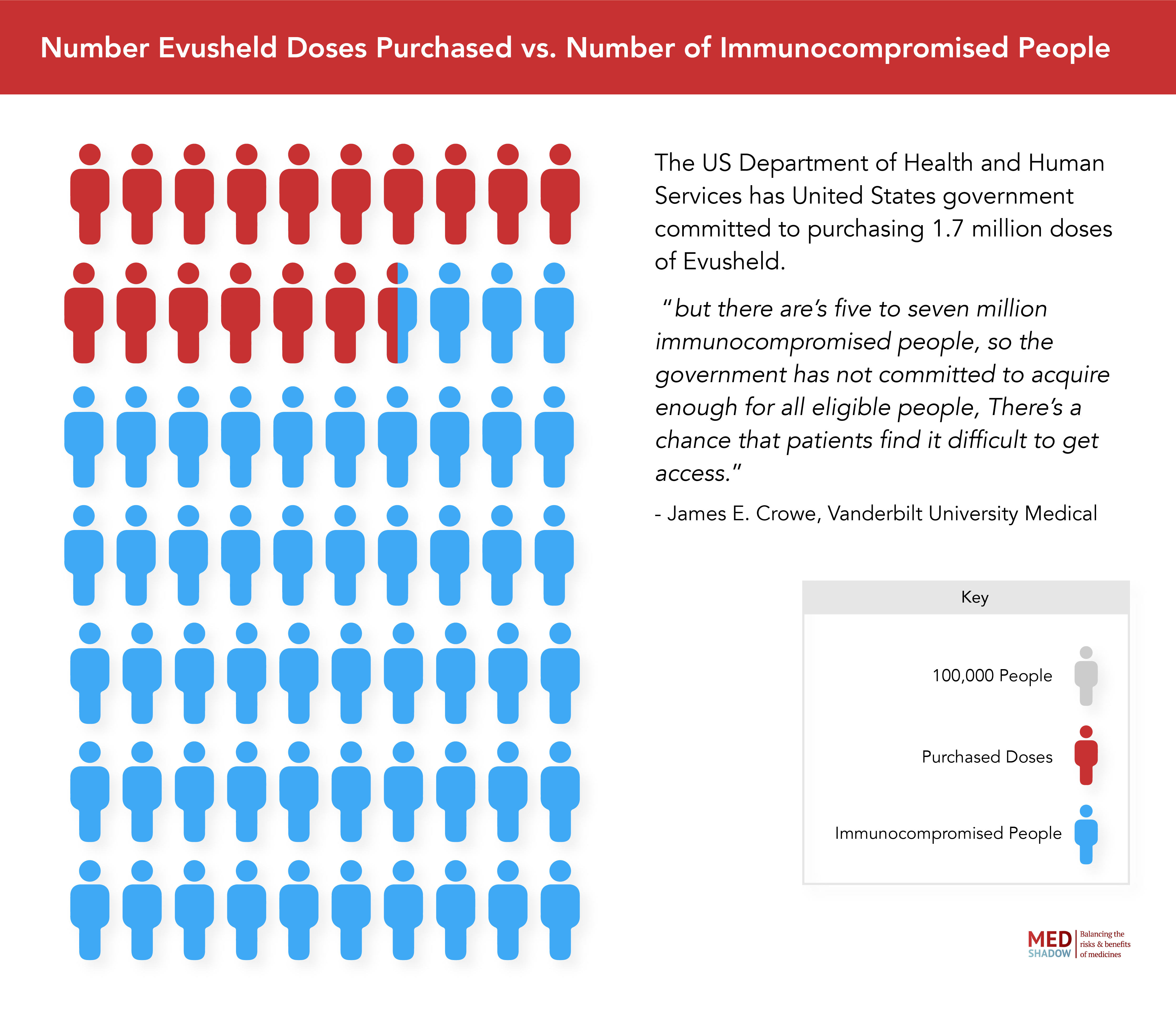
The US Department of Health and Human Services has committed to purchasing 1.7 million doses of the drug, “but there are five to seven million immunocompromised people, so the government has not committed to acquire enough for all eligible people,” says Crowe. “There’s a chance that patients find it difficult to get access.” 

evusheld antibodies to prevent covid

However, The New York Times reports that challenges in getting access are more likely to stem from confusion among both patients and doctors about when to use it, than it is about being unavailable.

Unfortunately, during the Omicron surge, scientists found that several of the antibodies they were using to treat patients already infected were no longer able to neutralize the new variant.That wasn’t true using Evusheld, which still maintained much of its efficacy.

MedShadow spoke with Crowe about who can use the drug and what you need to know about it.


Editor’s note: This conversation has been lightly edited and condensed for clarity.


MedShadow: What is Evusheld? How is it different from other antibodies used to treat people who are already infected with COVID-19?

Crowe: There are two main differences between Evusheld and the others. One is that the antibody has been engineered to be long-acting. So it has a half-life of about three months instead of three weeks. The benefit of that is that it can be used for prevention, rather than just treatment.

The other is that the antibodies were modified in a way that reduces their interaction with the body’s immune system. They were engineered so they just interact with the virus and they don’t interact with the body’s immune system. That was done for safety, because we didn’t think we could control what the antibodies were doing, so it doesn’t contribute to inflammation. It simply deals with the virus.


MedShadow: How should it be taken? Do patients need multiple doses?

Crowe: There are two antibodies [in Evusheld], and they were put in separate vials. So when Evusheld is administered, you actually get two shots.

Now Omicron is a much different virus than all the variants before. Many of the antibodies [used for treatment] completely lost activity [against Omicron]. Evusheld still has significant activity, but it has reduced activity. The company and the FDA did very sophisticated calculations and they concluded that using twice as much antibody is desirable, if you can do that, with Omicron. So the FDA issued an advisory that you would actually get twice as much of each of the antibodies. As a consequence, if patients had only gotten the normal dose, [the FDA] advised that they get another dose of it.

[Editor’s Note: The FDA suggests that patients who get Evusheld may need additional doses as protection wanes after 3-6 months, but it hasn’t announced an exact timeline for when those injections will be required. The agency recommends discussing timing with your physician for now.]


MedShadow: Who could benefit from receiving injections of Evusheld?

Crowe: It’s for basically people who cannot be immunized with current vaccines. So these are people who are moderately to severely immunocompromised, due to some medical condition, or else because they have been given immunosuppressive medicines or treatments. They can’t respond well to vaccination.

Or there are rare people who have had severe adverse reactions like an allergic reaction to a COVID vaccine, or components of a COVID vaccine, and those people are eligible to get it.

You’re not supposed to get it if you have COVID. You’re not supposed to get it if you’ve been exposed to COVID, which is called postexposure prophylaxis. It’s currently only approved for prevention. And you have to be over 12.

There are  considered to be five to seven million immune compromised people in the US, which is quite a large number of people. 

MedShadow: What kinds of side effects should patients know about?

Crowe: In the trials, the most common side effects have been mild things like headache and fatigue and sometimes cough. Those were the things that were noted. Whether or not they’re due to the antibody is not all that clear.

Sometimes patients will have an allergic reaction. It’s very rare, and that’s not about Evusheld specifically. That’s for all antibodies that may give you an allergic reaction.

Any time you give a shot in the muscle, if you have a bleeding disorder, you have to be careful with that because you’re using a needle [which can lead to intramuscular bleeds].

A lot of the people in the trials were high-risk individuals, and there were cardiac events in people during the trials. And some of the people who got Evusheld had cardiac events like heart attacks. But it’s not clear that the drug caused those. If you are really [at] high risk for heart attacks, you have to think about an uncertain risk, [whether you] would do it or not? Personally, I would do it. I’d rather have the drug and prevent COVID. [Editor’s note: in the clinical trials, 0.6% of patients who received the antibodies had a cardiac event compared to 0.2% of patients who received a placebo. One person who received the drug died.]


MedShadow: How effective is Evusheld against Omicron?

Crowe: Trials have not been done specifically with Omicron, so I can’t really say what would happen clinically. But we have the new viruses and we have the antibodies. We mix them in the lab and then measure the concentration needed to inhibit the virus. And if you need more concentration for Omicron, than you did for Delta, then you say the “activity is reduced.” At the doses we’re giving, even at the reduced potency, it’s expected that it would work.

There have been some misunderstandings about the in vitro findings. We expect the drug to still work, but more studies are being done. [Those studies are asking] how well does it work and how long does it work? But it’s predicted to benefit patients.

The important information for patients and providers is that the prophylaxis should still be a benefit and be used.


The post Q&A: Antibodies to Prevent, Not Treat, COVID-19 appeared first on MedShadow Foundation.


Original post here: Q&A: Antibodies to Prevent, Not Treat, COVID-19

An Expert Guide to Safer, Smarter, Supplement Use

On May 13th, MedShadow is hosting a live webinar with an integrative psychiatrist and a clinical pharmacist to answer the questions most sup...