Friday, February 11, 2022

Exercise as Medicine

Are you tired of taking meds for diabetes, high blood pressure, heart disease, insomnia, even depression? Instead of standing in line at the pharmacy, you might find taking a walk will help you more than drugs. Considering exercise to be as important as taking medicine might change your life. 

Not long ago I received a phone call from a very excited client of mine. I had been working as a personal trainer with her for several months. One goal we were working toward was lowering her blood sugar levels in an attempt to have her avoid going on medication. She was calling to tell me the great news about her latest blood work results: all of her diabetes markers had decreased, negating her need for medication.

“I just can’t believe it!” she exclaimed. “I didn’t expect exercise to help out so much!”

Trainers and exercise enthusiasts alike have found that physical activity can lead to significant improvements in common medical conditions. Jennifer Katt, owner of Surround Fitness in Woodbridge, VA, has several clients who have experienced health benefits, from improvements in blood sugar to decreases in blood pressure. “I have high blood pressure, along with Sjogren’s Syndrome, osteoarthritis, osteopenia, and hypothyroidism,” explains one of her clients. “I have lost inches and weight due to increased exercise and activity, which has definitely benefited my hypertension and osteoarthritis. The strength training, which I do multiple times a week, is helping prevent osteopenia from becoming osteoporosis.”

In some cases, exercise can be as effective as medication for managing certain health conditions. “The benefits of exercise in minimizing risk and managing diabetes are vast,” says Alison Acerra, Registered Dietitian and Functional Nutrition Coach. “Exercise can improve the body’s sensitivity to insulin, helping to control blood sugars, while lowering blood pressure, reducing risk of cardiovascular disease and improving mood and overall sense of wellbeing.”

Here is a list of several conditions, the medications commonly used to treat them, their possible side effects, and how exercise can help reduce or eliminate the need for medication.

Type 2 Diabetes

Common Medications: 

Metformin (Biguanides: Glucophage) 

Jardiance (empagliflozin), Invokana (canagliflozin) — SGLT2 inhibitors

Victoza (liraglutide), Ozempic (semaglutide) — GLP-1 receptor agonists

Onglyza (saxagliptin), Nesina (alogliptin) — DPP-4 inhibitors

Avandia (rosiglitazone), Actos (pioglitazone) — thiazolidinediones 

Amaryl (glimepiride), Glucotrol (glipizide) — sulfonylureas


Possible Side Effects: While each class of diabetes medications has different side effects, some of the most common are nausea, diarrhea, weight changes, headache, and dizziness, and some of the most serious are hypoglycemia (a sudden drop in blood sugar), kidney failure (for SGLT-2 and GLP-1 drugs), and increased risk of heart attacks (for thiazolidinediones).

Expert Opinion: In contrast to exercise, diabetes medications can come with serious risks and tradeoffs. For example, the drug Avandia (rosiglitazone) has been shown to increase the risk of cardiovascular events in Type 2 diabetes patients. Other types of medications (for example, SGLT2 inhibitors) reduce the risk of cardiac events in diabetics, so physicians are currently advocating for wider use of these medications. However, these drugs come with other downsides, such as possible kidney damage. Given the complexity of medication management, exercise can give people with Type 2 diabetes more options for safely improving their health.

Exercise, both aerobic and strength training, improves the body’s response to insulin, as muscle and fat become more efficient in removing glucose from the blood, says Katt. 

“There is some data indicating that interval training provides the best benefit for insulin resistance (pre-diabetes),” says Amy Doneen, MSN, ARNP, co-author of Beat the Heart Attack Gene (Wiley, 2014). “Interval training requires cyclic raising of the heart rate beyond 70 percent of [a person’s] maximum for a period of time and then reducing the intensity back to moderate” for a similar amount of time. (The American Heart Association defines “moderate intensity” as 50 to 70 percent of maximum heart rate). The intervals can run from several seconds to several minutes. 

According to the American College of Sports Medicine and the American Diabetes Association, the combination of aerobic exercise and resistance training have the greatest effect on blood sugar management. The American Diabetes Association states that “high-intensity bursts of activity, weight lifting or both…can boost the health benefits of your aerobic workout.” The ADA recommends that individuals target 150 minutes of aerobic exercise per week at a moderate pace, or 75 minutes per week at a vigorous pace. The recommendations also include resistance training two or three times per week, like “free weights, weight machines or activities that use your own body weight — such as rock climbing or heavy gardening.”

High Blood Pressure/Heart Disease

Common Medications: Microzide (hydrochlorothiazide), Lasix (furosemide) — diuretics 

Lopressor (metoprolol), Coreg (carvedilol) — beta blockers

Prinivil (lisinopril), Monopril (fosinopril) — angiotensin converting enzyme inhibitors (ACE inhibitors) 

Cozaar (losartan) — angiotensin receptor blocker (ARB)

Norvasc (amlodipine), Cartia (diltiazem) — calcium channel blockers 

Possible Side Effects: mineral depletion (for diuretics), decreased heart rate response to activity (for beta blockers), high potassium (for ACE inhibitors and angiotensin receptor blockers), and fluid retention (for calcium channel blockers).

Expert Opinion: “Research tells us exercise will reduce blood pressure even in patients with the toughest blood pressures to control—resistive hypertension,” says Doneen. “One of the biggest causes of high blood pressure is pre-diabetes. Lots of pre-diabetic patients present with hypertension and are on several blood pressure medications. Once they start moving away from diabetes, their blood pressure will start to decrease and blood pressure medications can be reduced or stopped.”

Exercise is known to lower blood pressure and is considered a cornerstone of blood pressure management,” adds Doneen. The good news is that studies show that both aerobic and resistance training improve blood pressure.”

A 2019 meta-analysis that compared studies on exercise with studies on medication found that exercise regimens were as effective as the standard medications at lowering blood pressure in people with hypertension. This was true of both aerobic exercise and resistance training, and the benefits were greatest for those with the highest blood pressure.

Insomnia

Common Medications: Ambien (zolpidem), Sonata (zaleplon), Lunesta (eszopiclone) — sedative-hypnotics 

Belsomra (suvorexant), Dayvigo (lemborexant) — orexin receptor antagonists 

Possible Side Effects: daytime drowsiness, headache, dizziness, cognitive impairment, allergic reaction, complex sleep behaviors (such as walking, eating, or driving), increased risk of depression, falls, and poor driving.

Expert Opinion: “While sleeping pills are only intended for short term use, they are typically used for much longer periods,” says Acerra. “They can hide the underlying root causes of insomnia and mask other health conditions that need attention. It’s also possible to build up a tolerance [to sleep aids], creating a need for higher doses that come with health risks such as slowed breathing, digestive imbalances, and cognitive deficits. Unfortunately, withdrawal symptoms can be challenging and result in more severe insomnia.”

Exercise: Studies have long shown that exercisers tend to sleep better. A 2013 National Sleep Foundation Poll found:

  • 83% of vigorous exercisers reported very or fairly good sleep quality, compared to 56 percent of non-exercisers.
  • 67% of vigorous exercisers reported a good night’s sleep on all or most work nights, compared to 39% of non-exercisers.

While it was once believed that exercising too close to bedtime interfered with sleep, more recent research suggests this effect varies across individuals; some people are able to exercise at night without sleep disruption while others are not. The National Sleep Foundation advises normal sleepers to exercise at any time of day, as long as it doesn’t reduce their total sleep time. For those with existing insomnia, avoiding late-night exercise (especially vigorous exercise) is still recommended.

For insomnia sufferers, however, exercise is not a quick fix. A 2019 review found that exercise was most clearly effective for people with milder versions of insomnia; those with more severe insomnia may need to combine exercise with other interventions. However, while exercise may not improve every insomnia symptom, it appears particularly promising for reducing the time it takes to fall asleep, which is one of the most common and frustrating symptoms of insomnia.

Depression

Common Medications: Lexapro (escitalopram), Zoloft (sertraline), Prozac (fluoxetine) selective serotonin reuptake inhibitors

Effexor (venlafaxine), Cymbalta (duloxetine) — serotonin norepinephrine reuptake inhibitors 

Possible Side Effects: fatigue, drowsiness, nausea, increased appetite, weight gain, sexual dysfunction such as decreased sex drive or trouble reaching orgasm, insomnia, and dry mouth.

Expert Opinion: “While antidepressants can be effective in more chronic, moderate, or severe cases of depression, they come with significant side effects, says Acerra. “In addition, they have been shown to be ineffective against mild depression. Exercise can be both an adjunct and alternative therapy. While high-intensity exercise releases endorphins, resulting in a “runner’s high,” low-intensity exercise releases nerve growth factor which stimulates nerve cell growth and neural connections that can relieve depression.”

“Exercise can reduce the need for medications in this case, because it can improve mood, sleep, and a person’s sense of self-efficacy and self-esteem,” explains Katt. “It can also reduce stress and increase energy.”

Research published in The Primary Care Companion Journal of Clinical Psychiatry suggests that exercise frequency is more important regarding depression than intensity and duration, at least at first, until exercise as a habit is established. Both aerobic exercise and resistance training have been shown to be effective in reducing depressive symptoms. The key is to find something you like and will enjoy, whether it’s hiking, Zumba, yoga, running or swimming.

In Conclusion

Many prescription drugs used to treat common conditions have serious side effects that often prompt the need for additional medications. This disease-drug-more drugs cycle can be eliminated or lessened when patients use exercise and other non-pharmacological approaches, in conjunction with medication when necessary, to treat their illnesses.


This article was originally published on March 27, 2014. It was updated by Joyce Clanon and republished February 11, 2022.

The post Exercise as Medicine appeared first on MedShadow.


Original post here: Exercise as Medicine

Tuesday, February 8, 2022

Drinking and Drugs: How Alcohol Can Mess With Your Meds

Alcohol has strong associations with fun and relaxation, but it’s just another drug as far as your body is concerned. The side effects of medicines can be increased when you have even one drink. Beer, wine or hard liquor, combined with other drugs, can create dangerous, even life-threatening, interactions that include internal bleeding, heart problems and difficulty breathing.

Prescription drugs, OTC drugs and even herbal remedies can trigger dangerous side effects. The National Institute on Alcohol Abuse and Alcoholism (NIAAA) lists more than 100 common drugs (https://pubs.niaaa.nih.gov/publications/Medicine/medicine.htm) that, if taken with alcohol, can cause harm. These drugs include many that are prescribed for ADHD, high blood pressure and high cholesterol, not to mention OTC treatments such as ibuprofen, naproxen and acetaminophen. Combining these with even small amounts of alcohol can result in adverse events ranging from drowsiness and upset stomach to liver damage and death.

Alcohol Slows the Body Down

That relaxing glass of wine or after work beer with friends contains ethanol (ethyl alcohol), a psychoactive chemical that depresses the central nervous system and can interfere with sensory input (what we see and hear,) emotions, inhibitions and movement.

“Pharmacologically, alcohol is a sedative hypnotic — it slows you down,” says NIAAA (National Association of Alcohol Abuse and Alcoholism) Director George Koob, PhD.

Mixing alcohol and drugs can produce two types of reactions. In the first, alcohol intensifies the effect of the drug, or vice versa. In the second, the drug-alcohol interaction can affect how a drug or alcohol moves through the body.

Here are six drug and drug classes you should especially avoid mixing with alcohol:

  • Prescription Opiates (codeine, Oxycontin (oxycodone), Vicodin, Percocet, fentanyl, etc) Having a drink with opiates can slow or stop breathing, lower your pulse and blood pressure and lead to unconsciousness, coma and death
  • Benzodiazepines [Valium (diazepam), Ativan (lorazepam) and Xanax (alprazolam)]. Taken with alcohol, they can depress respiratory function enough to cause death.
  • OTC Pain Meds (Tylenol/acetaminophen). This popular over-the-counter pain reliever, in concert with alcohol, can severely damage the liver.
  • ADHD Drugs (Ritalin, Adderall, Concerta) Stimulants conceal alcohol’s effects, so you can’t gauge how drunk you might be. Which could lead to blacking out, impaired judgment and poor coordination, passing out and death. 
  • Depression Meds (MOAIs/Monoamine oxidase inhibitors) These drugs, which include Parnate (tranylcypromine) and Nardil (phenelzine), are used to treat depression. An MAOI-interaction with beer or red wine can raise blood pressure to dangerously high levels.
  • Diabetes Drugs (Sulfonylureas like Amaryl/glimepiride, Glucotrol/glipizide This class of type 2 diabetes drugs when taken with alcohol can result in sudden changes in blood pressure and blood sugar levels which can cause acute reactions — flushing, nausea, vomiting, headache, rapid heartbeat, shakiness.


How Alcohol Intensifies Side Effects of Other Drugs


Taken with another sedative hypnotic — such as an opioid, barbiturates like Amytal, or tranquilizers like Valium — alcohol interacts in a “synergistic” way. That is, the total effect is greater than the sum of the individual effects of each drug.

“In this case, two plus two equals five,” says Koob.

With a drug like Valium, which can inhibit respiratory function, the synergistic effect can be fatal. One tragic case that made headlines involved Karen Ann Quinlan, who in 1975, while taking Valium (diazepam), drank alcohol at a party and later, at home in bed, stopped breathing long enough to suffer extensive brain damage. Her parents went to court to gain permission to take her off a respirator and allow her to die, but Quinlan lived in a vegetative state for an additional nine years.

With some drugs, drinking means a person will get much more intoxicated than they would using  alcohol alone. That’s because many medications contain alcohol or act like alcohol. For example, the antihistamine Benadryl (diphenhydramine) is a central nervous system depressant, like alcohol. An individual who can ordinarily take Benadryl without experiencing its common side effect of drowsiness, may find it difficult to fight off sleep if they take the allergy medicine while drinking alcohol.

These interactions can lead to people unwittingly engaging in risky behavior, like driving when they are in no shape to do so. Or, an interaction can simply “push the effect of the drug into the toxic range,” Rosenberg says.

Koob says those drugs that act on brain function are the most likely to interact in dangerous ways with alcohol, but quite a few other common drug types have risks, too. Tylenol (acetaminophen) and alcohol in tandem can be toxic to the liver, for example.

Vitamins, Herbs and Alcohol, High Risk 

Some herbal products when mixed with alcohol can cause liver damage — black cohosh, kava, Saw palmetto and valerian for example.

Some herbs cause sleepiness when used in combination with alcohol – chamomile, echinacea, kava, St. John’s wort, 5-HTP and more.

High levels of Vitamins A, D, E and K can lead to liver damage when alcohol is consumed.  

Alcohol and Opioids: A Potentially Deadly Combination


“With a lot of drugs, these interactions can be lethal. That’s certainly true for the opioids,” Koob says. Conservatively, about 15% of deaths involving opioids today are actually alcohol-drug interactions, he says.

Emergency medicine doctor Mark Rosenberg, DO, Emergency Medicine at St. Joseph’s Healthcare System in Paterson, NJ, says patients with alcohol-opioid interactions in the ER is commonplace. “We see it every night. Opioids cause respiratory depression, which alcohol accentuates. The combined effect is what causes the death.”

Booze Can Keep Drugs in Your Body Longer


Mixing alcohol with medicine can keep both in your body longer or change the way your body reacts to each. An example of a pharmacokinetic interaction is when blood rushes to your face, neck and chest to create “flushing” (like blushing).  It can occur when some people take even a little alcohol with Diabinese (chlorpropamide), a sulfonylurea drug for type 2 diabetes, or some antibiotics, including Flagyl (metronidazole). Flushing is associated with potentially dangerous dilation of blood vessels, low blood pressure and rapid heartbeat.

Who is Most at Risk?

Anyone who takes medication and drinks could be at risk for dangerous alcohol-drug interactions, however the following groups have a heightened risk.

  • Women
  • People over 60
  • Those who are taking more than one drug


Alcohol affects women more than men because women’s bodies tend to have less water than men’s. “There’s less water volume for the alcohol you take in to distribute itself over. It’s more concentrated,” Koob says.

Older people feel the effects of alcohol more, too. Their bodies metabolize alcohol more slowly, so not only are they likelier to feel the effect, but ethanol will stay in their systems longer. They’re also more likely to take more than one medication, which raises the risk of an interaction with alcohol, and to be injured if they fall during an intoxicated episode.

Those taking more than one drug have to be even more careful about taking a drink. “The more drugs you take, the higher your risk of an interaction,” says Rosenberg.

It’s wise to approach alcohol, even on its own, with a great deal of respect. Excessive alcohol consumption is the third-highest preventable cause of death (behind smoking and obesity) in our society, killing an estimated 88,000 Americans every year. Having even one drink while on certain meds can be too much. Be sure to ask your physician or pharmacist about how any treatments you’ve been prescribed might interact with alcohol. 

The post Drinking and Drugs: How Alcohol Can Mess With Your Meds appeared first on MedShadow.


Original post here: Drinking and Drugs: How Alcohol Can Mess With Your Meds

Wednesday, February 2, 2022

Water Aerobics: A Safe Exercise for Many Patients 

Angela Ridgel, PhD, an exercise physiologist at Kent State University, usually helps patients exercise at the gym, while studying how it might improve their cognition and brain health. But many exercise routines on land, such as aerobic or stretching ones, for example, can be challenging for people with multiple sclerosis (MS), she says. “When you’re doing exercise [on] land, which is what we mostly do in my lab, that would have a tendency to make MS patients overheat and then exacerbate their symptoms,” she adds.

So she teamed up with a doctor who specializes in working with MS patients to see if water aerobics might be a better choice for you than a workout in the gym. 

However, you don’t have to have MS to benefit from a workout in water. Studies have shown that the regimens can contribute to overall fitness in healthy participants, healing from injuries and improving lower-back pain. It can be a safe choice for people managing a variety of conditions, from MS to breast cancer.

Water Aerobics for General Fitness 

Water aerobics can be a fun, sociable workout for anyone and is especially popular among people who want to minimize impact on their joints. The water’s buoyancy reduces stress on joints, while also providing resistance to strengthen muscles.

One study of 80 adults over 55 without pre-existing conditions showed that exercising in the water four times per week or who alternated between aquatic and land-based exercises experienced the same vascular benefits as those who exercised in the gym only.

This means people can choose a form of exercise that causes less pain,

stress or strain on joints, but will still benefit their heart health. This may be especially good news for people who may be more frail, or for those who are afraid of handling gym equipment,” the study’s author wrote in The Conversation.

Water Aerobics for Lower-Back Pain

Water-based exercises can help reduce lower-back pain, including that caused by pregnancy, according to a 2018 review study. A more recent trial published in January 2022 found that three months of biweekly water-aerobics classes was even more effective at reducing pain and improving sleep, quality of life and mental state than traditional physical therapy for patients with chronic lower-back pain. The patients continued to report that they felt better even 12 months after the trial.

Multiple Sclerosis 

People with MS often show limited blood flow in the brain, which can harm their cognition.

Exercise is known to help patients with MS, says Ridgel, but it’s difficult for them to do an intense workout as it can raise their body temperature and worsen symptoms.

Still, when it’s possible, patients with neurological diseases like MS “seem to get better benefits for the higher intensity versus just doing something long and slow.” She wondered if exercising in water would allow patients to reach higher intensities, and thus more effectively ease symptoms.

Her study lasted only one week. At the start, scientists measured blood flow in the brains of 31 participants. Then, every day for seven days, 17 patients completed a high-intensity hour-long water aerobics workout that raised their heart rate. The remaining 14 patients served as controls, maintaining their normal levels of activity. Before and after the seven days, researchers tested blood flow to the patients’ brains during a cognitive test. After the seven days of aerobics, the exercisers showed increased blood flow to their brains, while the 14 controls did not, suggesting that water aerobics may be a safe way for people with MS to exercise intensely and limit cognitive symptoms.

Breast Cancer

For decades, clinicians had advised cancer patients and survivors to emphasize rest instead of exercise. After thousands of studies, the American College of Sports Medicine released updated guidelines in 2019, suggesting that the organization change its tune by announcing that exercise was not only safe, but also beneficial for most cancer patients and survivors. It can even help mitigate treatment-related side effects,such as peripheral neuropathy and cardiovascular symptoms.

Still, patients and survivors have to be on the lookout for lymphedema, a dangerous buildup of fluid that happens when the lymph system is damaged or blocked. Amanda Salacinski, PhD, who studies movement science at Westfield State University, set out to test whether a patient participating in water aerobics for 12 weeks increased the risk of this complication for breast cancer patients. She also tested their overall fitness and muscle growth.

Her pilot study only included 10 patients, and they didn’t show substantial increases in strength, but they also had no higher risk of lymphedema, suggesting that the exercise was safe. Even more important than the physical gains, Salacinski hoped that the exercise routine could return some autonomy to the patients. Giving them a workout that they can control “in a world that is completely out of their control. That was one of the most important factors for me,” she says. 

She adds that  a small soon-to-be published study suggests that water aerobics does improve self-reported quality of life.

How to Start Water Aerobics

You can try some exercises on your own, but if you’re not familiar with water aerobics, find a class at your local public pool or YMCA. If you’re hoping it’ll help with a medical condition, ask your physician first. Patients should “make sure their doctor is comfortable with them cardiovascular-wise,” and that it’s safe for them to do an intense workout, says Ridgel.

It’s also helpful to meet with the instructor before classes begin and ask these questions:

  1. How much experience do you have working with people with my condition?
  2. Describe what happens in the first class
  3. How should I prepare and what equipment or clothing and accessories should I bring? 


The post Water Aerobics: A Safe Exercise for Many Patients  appeared first on MedShadow.


Original post here: Water Aerobics: A Safe Exercise for Many Patients 

Monday, January 31, 2022

Will going out in the cold give you a cold?

Many of us have heard: “Don’t go outside without a coat; you’ll catch a cold.”

That’s not exactly true. As with many things, the reality is more complicated. Here’s the distinction: Being cold isn’t why you get a cold. But it is true that cold weather makes it easier to get the cold or flu. It is still too early to tell how weather impacts the COVID-19 virus, but scientists are starting to think it behaves differently than cold and flu viruses.

As an associate professor of nursing with a background in public health, I’m asked about this all the time. So here’s a look at what actually happens.

Many viruses, including rhinovirus – the usual culprit in the common cold – and influenza, remain infectious longer and replicate faster in colder temperatures. That’s why these viruses spread more easily in winter. Wearing a heavy coat won’t necessarily make a difference.

Two women outside during the winter.
The cold weather does have an impact on whether or not you catch a cold.
Spencer Platt via Getty Images

Virus transmission is easier when it’s cold

More specifically, cold weather can change the outer membrane of the influenza virus; it makes the membrane more solid and rubbery. Scientists believe that the rubbery coating makes person-to-person transmission of the virus easier.

It’s not just cold winter air that causes a problem. Air that is dry in addition to cold has been linked to flu outbreaks. A National Institutes of Health study suggests that dry winter air further helps the influenza virus to remain infectious longer.

How your immune system responds during cold weather also matters a great deal. Inhaling cold air may adversely affect the immune response in your respiratory tract, which makes it easier for viruses to take hold. That’s why wearing a scarf over your nose and mouth may help.

Also, most people get less sunlight in the winter. That is a problem because the Sun is a major source of vitamin D, which is essential for immune system health. Physical activity, another factor, also tends to drop during the winter. People are three times more likely to delay exercise in snowy or icy conditions.

Instead, people spend more time indoors. That usually means more close contact with others, which leads to disease spread. Respiratory viruses generally spread within a six-foot radius of an infected person. When you are indoors, it is very likely that you are closer together than six feet.

In addition, cold weather dries out your eyes and the mucous membranes in your nose and throat. Because viruses that cause colds and flu are typically inhaled, the virus can attach more easily to these impaired, dried-out passages.

A child in bed with a cold.
Spending more time indoors can increase the chances of catching a cold.
Rawpixel via Getty Images

What you can do

While the bottom line is that being wet and cold doesn’t make you sick, there are strategies to help prevent illness all year long.

  • Wash your hands often.
  • Avoid touching your face, something people do between nine and 23 times an hour.
  • Stay hydrated; eight glasses a day of water is a good goal, but that could be more or less depending on lifestyle and the size of the person.
  • Eat a well-balanced diet. Dark green, leafy vegetables are rich in immune system-supporting vitamins; eggs, fortified milk, salmon and tuna have vitamin D.
  • Stay physically active, even during the winter.
  • Clean the hard, high-touch surfaces in your home often.
  • If your nose or throat gets dry in the winter, consider using a humidifier.
  • Get the flu vaccine.

And one more important thing this year: When it’s your turn, make sure you get the COVID-19 vaccine.

[The Conversation’s most important coronavirus headlines, weekly in a new science newsletter.]The Conversation

Libby Richards, Associate Professor of Nursing, Purdue University

This article is republished from The Conversation under a Creative Commons license. Read the original article.

The post Will going out in the cold give you a cold? appeared first on MedShadow.


Original post here: Will going out in the cold give you a cold?

Friday, January 28, 2022

Can an Opioid Addiction Drug Treat Autoimmune Disorders?

Evidence is mounting that low doses of naltrexone can treat conditions like lupus and multiple sclerosis effectively and with few side effects.

A slew of drugs, both new and old, are used to treat autoimmune disorders like multiple sclerosis (MS), lupus and Crohn’s disease. Most of them come with side effects, some of them serious. But research and experience from patients and doctors are mounting that a drug used to treat substance abuse, when used in lower doses, can effectively treat autoimmune conditions with few side effects.

The drug is naltrexone, which was first approved in the 1980s to treat heroin addiction. In recent years, it has been prescribed more and more at a low dose for patients with autoimmune disorders. But is this off-label use (approved by the FDA for other conditions but not autoimmune disorders) safe and effective?

Proponents say low-dose naltrexone (LDN) is a treatment with few side effects that, for autoimmune patients, can help regulate the immune system (keeping it from behaving abnormally), provide pain relief and stop the body from attacking itself further.

How It Works

Naltrexone is an opioid antagonist, meaning it blocks the brain’s opioid receptors. Endorphins, the body’s “feel good” chemicals, bind to opioid receptors and give us a sense of calm. Drugs like heroin or opioid painkillers can also attach to these receptors, and they produce that same calming effect.

Naltrexone hasIt’s also been prescribed approved for alcohol addiction. Naltrexone keeps substances like heroin and alcohol from attaching to the brain’s opioid receptors, preventing users from getting high. That’s why it’s used to keep drug users in recovery from relapsing. LDN is thought to help reduce symptoms of autoimmune diseases because by partially blocking these receptors it helps to trigger the body’s production of endorphins.

The typical alcohol addiction treatment dose is 50 mg a day. For opioid addiction, an initial dose of 25 mg may be given and increased to 50 mg per day if no withdrawal signs occur with 25 mg. Adverse events include nausea and vomiting, headache, fatigue, dizziness, anxiety and joint pain.

Patient Experience

While some autoimmune patients who’ve taken LDN report no change at all in their health, and others note side effects like insomnia, vivid dreams or night sweats, others, like Darlene Nichols from St. Louis, report successes. Nichols was diagnosed with lupus in 1989, and later, myasthenia gravis.

She tried prednisone and other drugs typically prescribed for autoimmune conditions, “but they didn’t really work for me,” she said. “I had days where my legs would be so weak I couldn’t walk.” In 2009, she started taking 3.5 mg a day of LDN and then 4.5 mg.

“After two weeks, I was feeling great,” she said. “I had energy and strength, my fatigue disappeared. It’s like a miracle for me.” As for side effects, Nichols said initially her quality of sleep declined slightly, but soon returned to normal.

Other people with autoimmune diseases who’ve taken LDN point to decrease autoantibodies — antibodies that target healthy cells in autoimmune conditions — and an improvement in their pain.

No Significant Side Effects For Most

In a 2019 analysis published in BMC Medicine, researchers reviewed the results of 89 randomized trials on serious adverse events of naltrexone versus placebo. The studies included about 12,000 people with alcohol use disorder and other addictions, psychiatric disorders, obesity, Crohn’s disease, fibromyalgia, cancers and other conditions. The researchers concluded that naltrexone doesn’t increase the risk of serious adverse events over placebo.

Physicians prescribing LDN for autoimmune conditions typically give up to 4.5 mg to be taken before bed for peak effectiveness. Patients having vivid dreams, insomnia or night sweats, however, can take their dose in the morning instead.

The medication is popular with functional medicine doctors. Functional medicine aims to restore health by getting to the root cause of patients’ symptoms.

Ann Shippy, MD, an Austin, Texas, internist and functional medicine practitioner, has prescribed LDN for patients with a variety of autoimmune conditions for the last 10 years. “It can be helpful for a person’s general sense of well-being while we’re working on the root cause of getting the body repaired,” she said.

Some of her patients have found the medication to be “a game-changer,” she said, while some report no change in symptoms. Others have been very sensitive to it, she said, reporting vivid dreams. Intense dreams typically subside though, Shippy added, or improve on a lower dose. “I haven’t seen any significant side effects,” she said.

Since LDN is not approved by the FDA for any condition, it’s not commercially available. Patients must obtain a prescription from their physician and get the medication from a compounding pharmacy. Doctors advise finding a pharmacy familiar with making LDN to ensure they don’t compound a slow-release formula or add calcium carbonate as a filler, which can slow absorption.

An Immune System Regulator

In the mid-1980s — when naltrexone was approved for opioid addiction treatment — New York City physician Bernard Bihari found it could help patients with autoimmunity, cancer, HIV and AIDS when taken at low doses of around 3 mg.

Low doses only partly block opioid receptors at times when our endorphin levels are high, at around 3 a.m. or 4 a.m. That tells the brain our endorphin levels are low, prompting our brain to make more. It’s a mechanism that can theoretically help people with autoimmune conditions, who typically have lower levels of endorphins, which play a key role in regulating the immune system.

In treating HIV patients in the 1980s, “it wasn’t a home run,” said Ronald Hoffman, MD, an integrative medicine physician and medical nutritionist in New York City.

However, decades later, Hoffman has seen his patients with multiple sclerosis, Crohn’s disease and itchy, inflammatory skin conditions improve on LDN. He uses it in conjunction with lifestyle changes, including diet modifications and adding supplements. He now also prescribes LDN routinely for cancer patients.

Seemingly Safe, But More Research Needed on Efficacy

Research has shown LDN can reduce symptom severity in autoimmune conditions and some other syndromes marked by chronic pain, such as fibromyalgia.

A study in Digestive Diseases and Sciences found that 88% of participants with Crohn’s taking LDN saw an improvement in symptoms. But an in-depth analysis of those results determined that the evidence was insufficient to suggest the efficacy or safety of LDN for treating people with active Crohn’s disease. Studies of LDN for MS have been mixed, with one in the Multiple Sclerosis Journal showing no difference between MS participants taking LDN and those taking a placebo in terms of quality of life, and one in the Annals of Neurology showing improvement in mental health quality of life in people with MS.

A later, long-term study of LDN for MS concluded that “the apparently non-toxic, inexpensive, biotherapeutic is safe and if taken alone did not result in an exacerbation of disease symptoms.” Researchers call for more long-term studies to determine the usefulness of LDN for MS.

Research supports LDN for other major autoimmune conditions. A 2018study in the Journal of Translational Medicine showed that 74.5% of patients with inflammatory bowel disease treated with LDN showed an improvement in symptoms, and 25.5% went into remission.

In laboratory research, LDN appears to suppress inflammation in COVID-19, leading researchers to suggest that it has the potential to treat the disease, alone or in combination with antivirals. A pilot study comparing treatment with LDN to placebo treatment has begun recruiting participants who have recently tested positive for COVID-19. Researchers hope to have results by the end of 2021.

Meanwhile, pharmaceutical company Immune Therapeutics is in talks with the FDA about a clinical trial for its LDN-based drug Lodonal, which is currently being used abroad for various indications,  and has plans to study the drug for COVID-19.

New York-based internist David Gluck, MD, writes about LDN at his website www.lowdosenaltrexone.org, where physicians and patients report they’ve seen success in autoimmune conditions including Hashimoto’s disease, rheumatoid arthritis, ulcerative colitis, celiac, Sjogren’s syndrome and scleroderma. 

The post Can an Opioid Addiction Drug Treat Autoimmune Disorders? appeared first on MedShadow.


Original post here: Can an Opioid Addiction Drug Treat Autoimmune Disorders?

Tuesday, January 25, 2022

So You Test Positive for COVID-19, Now What?

When the pandemic first broke out in 2020, every COVID-19 treatment was experimental. Researchers tested existing drugs, like the antiparasitic Plaquenil (hydroxychloroquine) or the anti-inflammatory Ozurdex, Maxidex or others (dexamethasone), that they hoped could fight the virus or dampen damaging inflammation. Other medical personnel tried antidepressants on patients.  

Now, two years in, researchers and regulators have provided evidence-based guidelines for repurposing drugs and administering newly developed treatments to patients at high risk of, or who already are, experiencing severe disease. Read on to learn your options, if you test positive.

Immediately After Testing Positive:

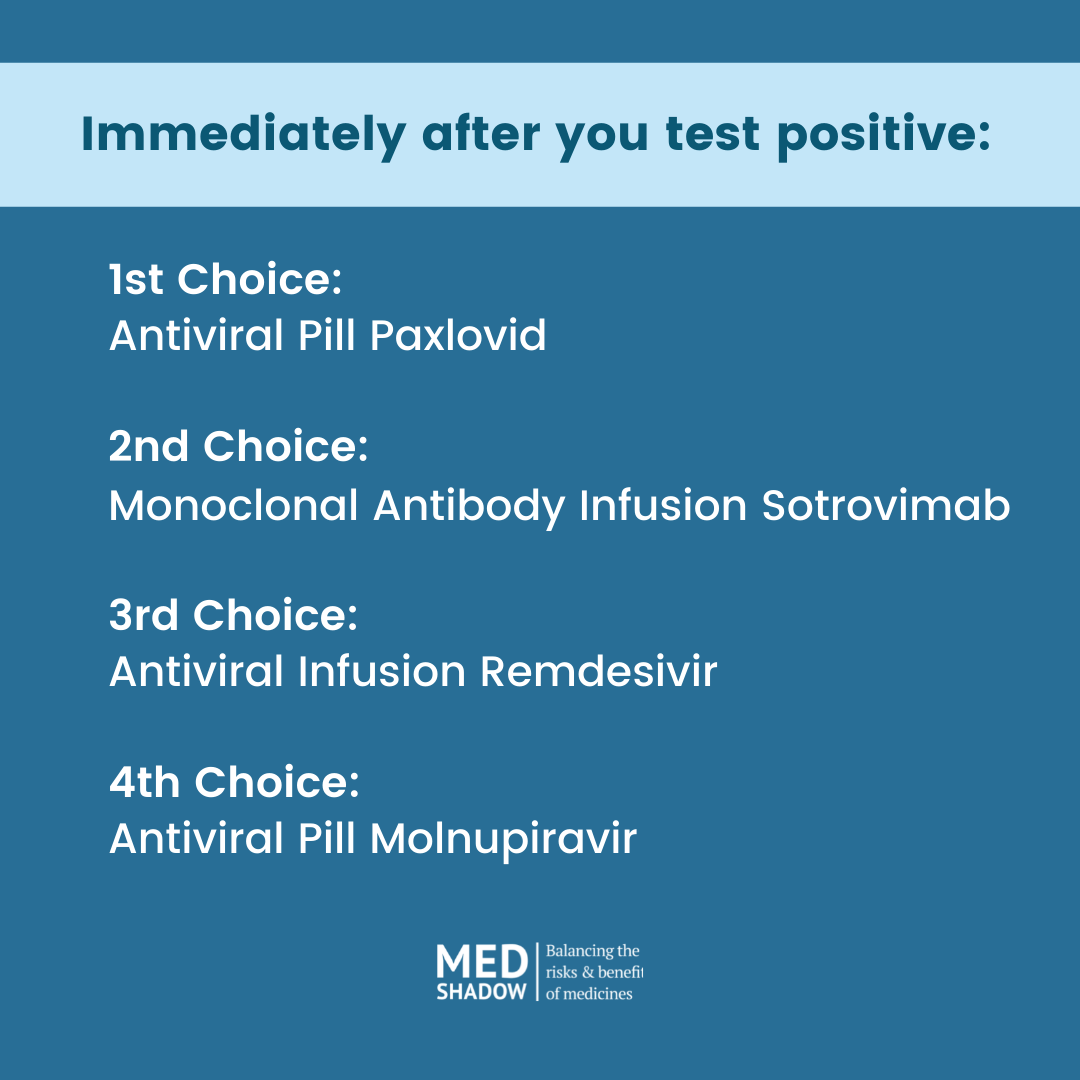
As the pandemic has continued, scientists have found several groups of people, such as those who are immunocompromised, have diabetes, hypertension or obesity, are at a higher risk for severe outcomes from COVID-19. If you are in that group and receive a positive test result, the National Institutes of Health (NIH) recommends the antiviral Paxlovid (nirmatrelvir, ritonavir) as your first option. If it’s unavailable or you can’t take it for another reason, the agency suggests Xerudy (sotrovimab), a monoclonal antibody. After that, it offers two other antiviral pills: Veklury (remdesivir) or Lagevrio (molnupiravir).

test positive

Which Antiviral Is Best 

The antiviral drugs, Paxlovid, Veklury  and Lagevrio are all designed to prevent the virus from replicating inside your body, so that the disease doesn’t worsen.

Veklury emerged early in the pandemic, but evidence of its efficacy was limited. It was only used on hospitalized patients. Recent data from the end of 2021 suggest that, if it’s administered within seven days of symptoms starting, it can keep 87% of high-risk patients out of the hospital. However, since it’s given intravenously, you need to have it administered at a hospital or clinic. The frequency is once a day for three days.

At the end of 2021, the Food and Drug Administration (FDA) authorized the two new antiviral drugs, available as pills you can pick up at a pharmacy and take at home.

Paxlovid is the clear drug of choice for the FDA. It decreased the chances of hospitalization by 89% in clinical trials, compared to Lagevrio’s 30% rate. Additionally, while Lagevrio is easier to take than Veklury, it comes with the worrisome potential of causing birth defects. These defects have not shown up in the trials with humans, but in animal models.

Still, Paxlovid does come with the disadvantage that it interacts with many medications you may have been prescribed. Be sure to ask your pharmacist about any drugs or supplements you already take, even if they’re over-the-counter (OTC).

One other reason you might be prescribed Lagevrio or Vekluryover Paxlovid, even if Paxlovid is your safest option, is that its availability is limited, and many patients have struggled to find it.

Monoclonal Antibodies 

Monoclonal antibodies—synthetically developed antibodies designed to target the virus—were some of the first treatments authorized to manage COVID-19 in 2020.

There are now three versions of monoclonal antibodies on the market: Eli Lillie’s Bamlanivimab plus etesevimab, Regen-COV (casirivimab plus imdevimab) and Xevudy (sotrovimab). Unfortunately, while all three were highly effective in that they prevented hospitalization in about 85% of patients early on, only Xevudy fights the Omicron variant, which as of late-January 2022 makes up more than 99.5% of COVID-19 cases in the US.

To get monoclonal antibodies, you need a prescription and must have it infused at either a hospital or medical facility. Because only one brand is effective against the Omicron variant, there is a shortage of them.

Side effects mainly include infusion-site reactions, such as redness or bruising, and allergic reactions that cause symptoms, like fevers, swelling and hives.

If Hospitalized, Know This 

If your illness is severe enough to require hospitalization, it’s likely that you have systemic inflammation. Doctors will likely recommend Decadron (dexamethasone) or another corticosteroid that will dampen your immune response. In some cases, they may add an interleukin (IL)-6 inhibitor, such as Actemra (tocilizumab).

Some other drugs that modulate immune activity, such as the antidepressant Luvox (fluvoxamine), are still being tested for COVID-19. Physicians are also likely to add blood thinners, such as heparin, to your regimen to help prevent dangerous clots from forming during treatment.

If you’re in critical care, you may need several of the previously mentioned therapeutics along with drugs to treat a variety of complications, such as bacterial pneumonia or renal failure.

The post So You Test Positive for COVID-19, Now What? appeared first on MedShadow.


Original post here: So You Test Positive for COVID-19, Now What?

Thursday, December 2, 2021

I Have the Flu or a Cold. What Should I Take?

How do you figure out exactly what’s wrong with you if you have symptoms common for a cold, the flu and COVID-19? It’s not always easy to tell. 

The table below helps you distinguish between the symptoms. Because the early signs of the flu and COVID are so similar, it’s probably best to get a test if you’re unsure of which it is.

 COLD V. FLU V. COVID-19

A Cold

  • Its onset is gradual and usually involves a “prodrome” stage, in which you have a sore throat or mild fatigue, pain and congestion.
  • No fever or low-grade fever
  • Sore throat, runny and stuffed-up nose, chills, body ache, fatigue and cough —  usually mild to moderate
  • Variable duration, but typically four to seven days
  • Differing recovery period, but typically 100% by Day 7 to 10

The Flu

  • Onset is sudden, usually within a few hours, and symptoms can be intense right away
  • Fever up to 102.5 F
  • Sore throat, runny and stuffed-up nose, chills, body ache, fatigue and cough, moderate to severe, and may include muscle aches and weakness
  • Duration of intense symptoms, typically four to six days; lingering weakness and fatigue, 10 to 14 days
  • Full recovery — feeling totally back to normal —  within three weeks

COVID-19

  • Onset: symptoms appear anywhere from two to 14 days after exposure, and usually start around Day 5
  • Cough, fever, loss of sense of smell, muscle aches, nausea and headache. The Centers for Disease Control and Prevention (CDC) offers an online symptom checker to help you determine if a COVID test is needed.
  • Recovery: a few days to a few weeks. Many patients report symptoms that linger for up to a year or more.

Should you stay at home?

All three infections are contagious by the time symptoms show up (some are even contagious beforehand). If possible, stay home to avoid spreading the virus to others. If you must venture out with a cold or the flu, avoid public places, wear a mask, limit direct contact with others and practice scrupulous handwashing and mouth covering when sneezing and coughing.

Do you need to call or see a doctor?

If you test positive for COVID, you may want to set up a telehealth visit with a healthcare provider to help monitor your condition. If you’re at high risk for severe disease, he or she may prescribe an infusion of monoclonal antibodies. 

Most people with a cold or the flu can skip a doctor or telehealth visit. However, there are a few exceptions. If a child under the age of 3 has a fever, it’s best to call your pediatrician. If you don’t recover within seven to 10 days, or symptoms worsen, it’s best to check in with a physician. Adults who are pregnant or over the age of 65 are at high risk of flu complications should see their doctor if symptoms seem worse than the average cold.

When is an antibiotic needed?

When your immune system is weakened by a severe viral infection, there’s a chance you could develop a secondary bacterial infection, causing pneumonia or bronchitis. You need a doctor to diagnose either one, and then prescribe antibiotics. These drugs won’t help if you only have a viral infection, and, in fact, they can harm you. Along with a host of side effects, antibiotics can increase your risk of dangerous infections like C. difficile (Clostridioides difficile), a bacteria that causes severe diarrhea and colitis. 

Nearly a third of antibiotic prescriptions are unnecessary. Taking them when unwarranted exposes you to their possible side effects, which can be diarrhea, nausea and potentially serious allergic reactions. More consequential, it also breeds antibiotic-resistant bacteria among the broader population, undermining the effectiveness of antibiotics when really needed. More than 35,000 people die annually from infections of antibiotic-resistant bacteria.

Which Non-prescription drugs work and which don’t, and which are safest?

Many over-the-counter drugs help relieve cold, flu and even mild COVID symptoms. There’s danger if you take too many drugs in combination and too much of any drug. It’s crucial to know when you might need a higher level of treatment, like hospital care or an infusion of monoclonal antibodies.

If you’re at high risk of COVID-19 complications

Medicines: The Food and Drug Administration (FDA) has authorized three brands of monoclonal antibody treatments for COVID-19: Regen-Cov (casirivimab and imdevimab), bamlanivimab and etesevimab, and sotrovimab.

Efficacy: These treatments have been shown to help prevent progression to severe disease and hospitalization, if given early in the disease course, that is, within the 10 days of developing symptoms.Risks: Because monoclonal antibodies were recently developed to treat COVID-19, not all the possible side effects are known. With any drug given by an infusion, there is a risk of bleeding, bruising and infection at the infusion site. Some patients have also had severe allergic reactions characterized by increased blood pressure, rapid or slowed heart rate, sweating, weakness, rash or confusion.

For These Symptoms: Body Aches and Fever

A fever doesn’t necessarily require treatment, as it is a part of your body’s effort to fight off the virus. The Mayo Clinic recommends treating a fever above 102 degrees F with ibuprofen or acetaminophen and calling your healthcare provider, if the fever lasts more than a few days.

Home remedies: A cool compress or sponge bath can help if your temperature spikes.

Medicines: Tylenol (acetaminophen), Advil (ibuprofen) and Aleve (naproxen

Efficacy and risks: All three ease body aches and reduce fever more or less equally.  However, acetaminophen is the safest, when used as directed. But taking even a little more than the daily max can harm the liver. Be aware that a combination cold and flu products may contain Tylenol already. So, if you’re taking combination products, don’t double dose by mistake by taking extra Tylenol.

Food for thought: : Taking the over-the-counter analgesic Tylenol may do more than just relieve your pain. It may also make you less likely to empathize with others in pain. A study published in the journal Social Cognitive and Affective Neuroscience conducted by researchers at Ohio State University reported on two experiments that found that when subjects who took acetaminophen, the active ingredient in Tylenol and found in more than 600 medicines, they thought those those talking about pain experienced less pain and suffering when compared to those who took no painkiller. Advil and Aleve can cause intestinal bleeding, and they have been linked to an increase in the risk of heart attack and kidney damage, primarily when taken in high doses for long periods.

If you’re pregnant, there’s a chance that Tylenol (acetaminophen) may increase the risk of developmental disorders in your child. However, having a fever can also pose risks to your baby. It’s best to weigh the dangers of exposing your baby to the treatment against those of exposing him or her to your illness with your OB/GYN.

Ask a doctor or pharmacist first if you are taking aspirin to prevent a heart attack or stroke, because naproxen, Aleve, may decrease the benefit of aspirin.


For These Symptoms: Congestion

Home remedies: chicken soup! Hot liquid and steam from any broth-based soup may help open up swollen airways and thin out mucus. It also soothes a sore throat, tastes good and nourishes you.

Neti pots and nasal irrigation: Yes, they can be messy to use, but they do ease congestion.

Steam inhalation: Warm-water vapor helps loosen mucus, which feels good. Though it’s unclear whether that change translates into reduced congestion, many people swear by it. Try making your own home sauna by heating water (don’t boil, because that’s too hot), put a towel over your head as you lean carefully over the water. The towel will trap the steam, so it concentrates toward your sinuses. Be careful. If it feels too hot, it is.  A hot shower may be safer than putting your head over a piping-hot pot of water.

Medicines:

  • Afrin, Dristan Mucinex Sinus-Max Nasal Spray, Vicks Sinex Severe Nasal Spray (oxymetazoline nasal spray)
  • Equate Congestion Suphedrine PE Nasal Decongestant, Sudafed PE Congestion (phenylephrine) 
  • Sudafed 12 Hour (pseudoephedrine) 
  • Topical for skin, Mentholatum, Vicks VapoRub (camphor, eucalyptus or menthol rubs)

Efficacy and risks: Nasal decongestants have a modest, but noticeable, effect. The sprays work within minutes, but can worsen stuffiness if taken for longer than three days. The pills can raise blood pressure, cause insomnia, heartbeat abnormalities, tremors, anxiety and hallucinations. The topicals improve the flow of air through your nasal passages, but can irritate the skin.

For These Symptoms: Cough

Home remedies: Honey—It tastes good and feels soothing, and one 2014 review suggests that it’s better than a placebo at easing coughs. Add a teaspoon or two  to a cup of hot tea or let a teaspoonful slide down and cool your throat. 

Caution: Honey should not be given to infants younger than a year old, because it can contain the bacterium Clostridium botulinum, dangerous constipation and weakness.

Medicines:

  • Robitussin Long-Acting CoughGels, Vicks DayQuil Cough (dextromethorphan)
  • Mucinex 12 Hour, Tab Tussin (guaifenesin)Halls Menthol Cough Drops, Mentholatum, Vicks VapoRub (topical rubs, patches and lozenges that contain camphor or menthol) 

Efficacy and risks: Mucinex works by breaking up mucus in your throat, so you can expel it more easily if you have a “wet” cough. Some other cough suppressants, like Robitussin, are antitussives, meaning they reduce your reflex to cough. Evidence on the efficacy of these medicines is limited and mixed. If used continuously, cough drops can cause a rebound effect, worsening your cough over time. Antitussives can lead to confusion, constipation, stomach pain and headache. Taking too much may be dangerous, causing you to become weak and dizzy and slow down your breathing. 

Caution: Cough suppressants can cause increased sedation when taken with narcotics, sleeping pills, antihistamines or alcohol.


For These Symptoms: Runny Nose and Sneezing

Medicines: Antihistamines, such as Zyrtec (cetirizine), Aller-Chlor (chlorpheniramine), Benadryl Allergy (diphenhydramine),  Allegra (fexofenadine)  and Alavert, Claritin (loratadine). 

Efficacy and risks: A Cochrane Review, a systematic review of 18 trials, found that antihistamines can help reduce cold symptoms, but the effect is only likely to last a day or two.

Antihistamines can increase your heart rate, lower your blood pressure and cause drowsiness and constipation.

Caution: Taking chlorpheniramine or diphenhydramine with opioids, sleeping pills or alcohol makes sedation more likely.


For These Symptoms: Sore throat

Home remedies: Gargle with salted water. It’s inexpensive, safe and time-tested. Dissolve ½ to 1 teaspoon of salt into an eight-ounce glass of warm water, gargle in the back of the throat, then spit it out. Repeat a few times a day.

Medicines:

  • Pain relievers such as acetaminophen, ibuprofen and naproxen
  • Cepacol Extra Strength Sore Throat Sugar Free, Chloraseptic Warming Sore Throat Lozenges (benzocaine) 
  • Sucrets Sore Throat Lozenges (dyclonine )
  • Halls Triple Action Soothing Drops, Vicks VapoDrops (methol)
  • Chloraseptic Sore Throat Spray (phenol)

Efficacy and risks: Pain relievers help. For the risks of pain relievers, see Body Aches and Fever above.

Benzocaine, dyclonine and phenol work as local anesthetics, and menthol provides a cooling sensation in your throat. If the sore throat is accompanied by fever, you should consider getting tested for strep throat. For the risks from pain relievers, see “Body Aches and Fever,” above.

In rare cases, exceptionally large doses (two bags a day for 20 years) of lozenges can cause headaches, dizziness, breathing problems, sweating or seizures.

Are Combination Drugs Safe?

Many cold and flu products take a scattershot approach. For example, Vicks NyQuil Severe Cold & Flu Relief contains acetaminophen to treat aches and fever, dextromethorphan for coughs, phenylephrine for congestion and doxylamine to help you sleep.

When you feel lousy all over, such products can be tempting to take. But, safety-wise, it’s better to stick to single-ingredient products as much as possible. Why? Because the more drugs included in a product, the greater the risk of side effects.

For example, sedating antihistamines such as diphenhydramine, found in many combos, make falls more likely for adults 65 and older, and especially people who may take other medications that cause drowsiness. And too much acetaminophen, which is included in more than 600 OTC products, can lead to serious liver damage.

If you do opt for a combo drug, stick to one that treats the symptoms you actually have. “It just doesn’t really make sense to expose your body to ingredients you don’t need,” says Leigh Ann Mike, a pharmacist at the University of Washington.

Also, compare prices of brand-name combo drugs, such as Nyquil and Theraflu, with store-brand versions. The latter may have the same ingredients and are almost always cheaper.

The Danger of Too Much Acetaminophen (Tylenol)

Acetaminophen is generally the safest pain and fever reducer on the market. But it has a big downside if used in high doses. Studies have shown excessive use is common for people with colds and the flu—people who (a) assume that this widely available and popular pill is totally safe and (b) may not be aware that acetaminophen is an ingredient in hundreds of different cold and flu symptom products. As shown in this table, it’s easy to consume more than is safe.

High doses of acetaminophen cause illness and liver damage in tens of thousands of patients each year.

 HOW MUCH ACETAMINOPHEN ARE YOU TAKING?

Product and Purpose Acetaminophen per pill Acceptable dose per day Total
Tylenol Extra Strength 500 mg 6 pills 3,000 mg
Theraflu Express Max
Daytime Severe Cold & Cough
325 mg 8 pills 2,600 mg
NyQuil Cold and Flu Nighttime Relief 325 mg 2 pills 650 mg
Total 6,250 mg

The maximum daily dose recommended by most medical authorities: 3,250 mg

The daily dose linked to liver damage (even after only a single day’s use): 4,000 mg

The daily dose considered potentially fatal (even after a single day’s use): 7,500 mg

Consumer Reports took a deep dive into that question for its January 2018 cover story. Here’s what you need to know, including warnings on overdoing it with excessive use of over-the-counter drugs, vitamins and supplements.

Do Supplements Relieve Symptoms or Shorten the Duration of a Cold or the fFu?

Some recent research suggests that certain vitamins and herbs can ease cold and flu symptoms or shorten their duration. Overall, the evidence backing up most supplements in treating colds or the flu, however, ranges from weak to nonexistent.

Unlike drugs, the FDA doesn’t require that supplements be proven safe and effective before they head to market. Here’s the rundown on a few popular remedies.

Echinacea

A Cochrane Review of 24 trials hinted that echinacea teas or supplements might help prevent colds, but the results were inconclusive. Echinacea can also trigger nausea and worsen asthma for some people. Any hot tea—with or without echinacea—can help soothe some cold and flu symptoms.

Vitamin C

Vitamin C is critical to immune function, and having too little of it can leave you susceptible to colds and flu. There’s no conclusive evidence that supplements can actually treat an infection once it’s taken hold. Further,  loading up with megadoses of vitamin C after symptoms appear doesn’t help at all. Vitamin C can raise the risk of kidney stones and interacts negatively with cancer drugs, blood thinners and estrogen.

Zinc

Zinc may reduce the length of a common cold by just over two days, according to a 2020 meta-analysis. A separate trial that examined  a commercially available zinc lozenge found that those who used the zinc actually took longer to recover than those given a placebo. Possible side effects include diarrhea, nausea, stomach cramps and vomiting. Long-term use, especially in high doses, may cause copper deficiency, which can trigger anemia. The supplement can also interfere with certain antibiotics, by lowering their efficacy.

Read the label

Nighttime. Non-Drowsy. Maximum Strength. When you see those terms on an over-the-counter drug label, you might assume they have a uniform meaning. Not true. The FDA has no set definition for these terms. That means drugmakers can improvise.

“These claims are basically advertising copy—meant to catch your eye,”

says Barbara Young of the American Society of Health-System Pharmacists.

For example, the terms non-drowsy or daytime suggest that a product doesn’t contain a sleep aid, as in the case of Contac Cold & Flu Day. But it can also mean that a product includes a stimulant, such as the pseudoephedrine in Advil Cold & Sinus Non-Drowsy. Some people react badly to pseudoephedrine; it amps them up. So, yes, non-drowsy, but not always in a good way.

Similarly, the terms `night,  nighttime or pm often indicate that a product contains an antihistamine with drowsiness as a side effect. But different brands use different sleep aids: Alka-Seltzer Plus Maximum Strength Night Cold & Flu relies on doxylamine and Tylenol PM opts for diphenhydramine. Again, you may react better or worse to one or the other.

The terms express fast,“maximum, and extra strength can also be misleading  and vary from product to product. For example, Theraflu labels its products ExpressMax, except for its hot-drink powders.Mucinex adds Fast-Max to all its multi-symptom products, though nothing in the packaging explains how the products work faster.Robitussin Maximum Strength Cough & Chest Congestion DM has twice as much guaifenesin, an ingredient that may thin mucus, as the regular version—but both versions have the same amount of dextromethorphan.

Most important, higher doses of any ingredient aren’t always needed—and pose greater risk for little or no extra benefit.

Get Your Flu Shot!

The CDC estimated that the 2019-2020 flu vaccine prevented 6,300 flu-associated deaths along with more than 100,000 hospitalizations and 3.7 million infections. In 2017 and 2018, only about 37% of adults in the US got their flu vaccine. During the following year, coverage increased to about 45% of adults. Between 2019 and 2020, which was during the pandemic, more than 50% of adults received a flu vaccine. This year, you can get your COVID-19 shots at the same time as your flu vaccine.

Many people avoid flu shots and have lots of reasons not to get them. Here are  two common excuses to avoid the flu shot and rebuttals:

Myth #1: Flu Shots Don’t Work

In a typical year, the flu shot cuts your risk of getting the flu by 40% to 60%. If you get the flu anyway, your symptoms will be milder, and “You’re less likely to have complications, less likely to be admitted to the hospital and less likely to die,” says William Schaffner, MD, medical director of the National Foundation for Infectious Diseases.

Myth #2: It Can Cause the Flu

Almost all flu vaccines use an inactivated virus that does  NOT trigger the flu. But because the vaccine doesn’t eliminate your chance of getting the flu, and only reduces it, some people who develop the flu after getting the shot wrongly blame the vaccine.

Which vaccine should you get? Most years, teens and adults should consider a quadrivalent vaccine, which protects against four flu strains. People 50 and older have another option: Flublok Quadrivalent, which has triple the dose of other quadrivalents. Those 65 and older have two more choices: Fluzone High-Dose and Fluad. Both protect against only three strains, but Fluzone has four times the dose and Fluad adds an ingredient to boost the immune system’s response.Which vaccine should you have?

Most years, teens and adults should consider a quadrivalent vaccine, which protects against 4 flu strains.

People 50 and older have another option: Flublok Quadrivalent, which has triple the dose of other quadrivalents.

Those 65 and older have 2 more choices: Fluzone High-Dose and Fluad. Both protect against only 3 strains, but Fluzone has 4 times the dose and Fluad adds an ingredient to boost the immune system’s response.

If You Get the Flu, Should You Take Tamiflu or Other Antiviral Drugs?

Four antiviral drugs are FDA-approved to treat the flu: Tamiflu (oseltamivir), Relenza (zanamivir), Rapivab (peramivir) and Xofluza (baloxavir marboxil) .

They help the most when you take them within 48-hours of symptoms first appearing, but may help for up to four to five days after you first feel sick. They may also reduce the risk of complications (such as pneumonia and bronchitis, or even death). (See, Need to Know: Tamiflu.)

Experts and doctors differ on when to prescribe these medicines. Most doctors only prescribe them for people who have other illnesses or are at high risk for complications from the flu or both. That includes people over 65 and pregnant women. One reason doctors may not prescribe them to younger, healthier people is because of the side effects. The drugs can cause nausea, vomiting, headache and delirium.

The post I Have the Flu or a Cold. What Should I Take? appeared first on MedShadow.


Original post here: I Have the Flu or a Cold. What Should I Take?

An Expert Guide to Safer, Smarter, Supplement Use

On May 13th, MedShadow is hosting a live webinar with an integrative psychiatrist and a clinical pharmacist to answer the questions most sup...