Thursday, October 7, 2021

Pregnant or worried about infertility? Get vaccinated against COVID-19

As the delta variant of SARS-CoV-2 surges across the U.S., almost 1 in 5 Americans continue to resist getting shots that are widely available, safe and effective – particularly for preventing the most severe outcomes of the virus.

While people have many different justifications for not getting the shot, one particularly insidious bit of pseudoscience has surfaced. It is routinely invoked in the contentious debate over vaccine policy in the U.S. and continues to stir confusion and skepticism toward vaccines in young women across the globe.

This misinformed argument reasons that the coronavirus vaccines could affect fertility in women by mistakenly triggering the creation of antibodies that react with an important placental protein called syncytin-1. This protein contains minor similarities to the coronavirus spike protein used in all current COVID-19 vaccines. Thus, the false narrative goes, the immune system will not be able to differentiate between the two and will create antibodies that interfere with proper development of the placenta.

This argument lacks understanding of how the immune system does its job.

As an immunologist who studies COVID-19 infection and the ways it can cause the immune system to turn against itself, this misunderstanding comes up frequently in my conversations with friends, family members and even medical workers who are legitimately concerned about their health and their future ability to have children.

It is completely understandable to have questions about how a new vaccine might affect reproductive health. But the science is clear that getting vaccinated does not put women at risk for infertility. It protects women, their unborn children and their families from a serious disease that, ironically, could in fact affect fertility in men.

Antibodies rarely make mistakes

The immune system is an immensely complicated network of cells, tissues and proteins that interact with one another – and the outside world. It works to maintain a balanced, healthy environment so the rest of the cells in the body can do their jobs. Among other things, the immune system helps direct fetal development, oversees and manages the microbes that aid in digestion and, of course, fights off infection.

One of the immune system’s most critical jobs is to differentiate between the body’s own cells and those of outside invaders to prevent accidental attacks on itself. In immunology, this careful selection of responses is called “immune tolerance.” People whose immune systems fail to maintain this tolerance and instead attack their own cells and tissues are diagnosed with autoimmune disorders. These can range in symptoms and severity depending on the tissue being attacked. An example is rheumatoid arthritis – a misdirected antibody attack on soft tissue in the joints.
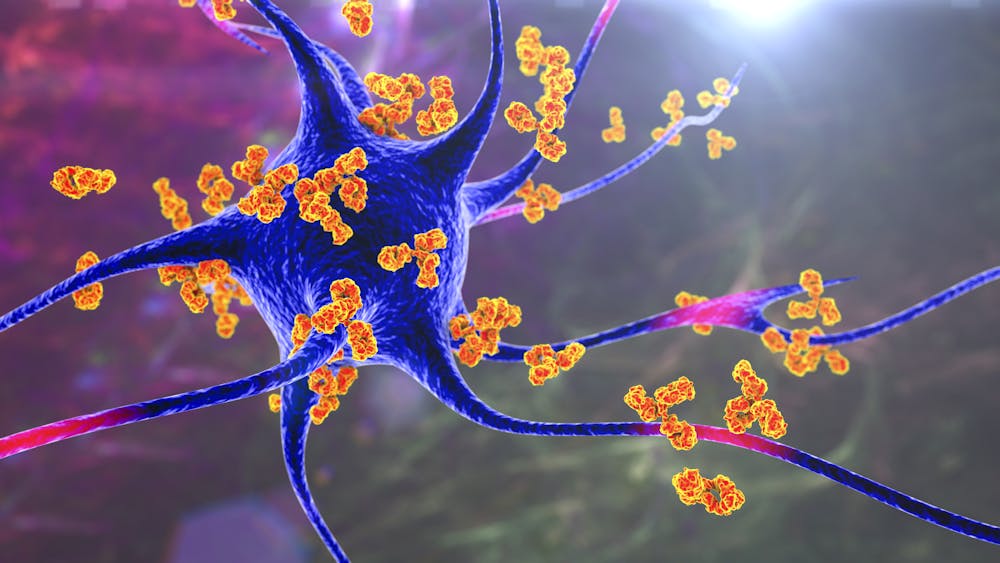
Conceptual illustration of antibodies attacking neurons
This depiction of antibodies attacking neurons illustrates what happens in some individuals with autoimmune disorders.
Kateryna Kon/Science Photo Library via Getty Images

The immune system has a series of checks and balances that are intended to prevent such autoimmune attacks. When B-cells – the cells in the immune system that produce antibodies – are first “born,” they carefully screen themselves to make sure that they won’t target the body’s own organs. That self-screening continues as B-cells patrol the body looking for an infection to fight; if they find something potentially threatening, like a vaccine, they engage in a highly orchestrated dance with other immune cells. Through that weeks-long process, only B-cells that produce antibodies against the outside invader survive. B-cells with self-destructive potential are killed.

Importantly, in parts of the body where it is absolutely critical that the immune system not mistakenly turn on its own cells – such as a developing placenta or in the brain – the entire region is immunosuppressive. This means that the threshold for activating the body’s immune response in those areas is set at an even higher bar.

This is not emerging science. These are well-established concepts among immunology experts. and have been for almost a half-century. As a result, it was not particularly noteworthy that a new preliminary study of women with fully developed immune responses against coronavirus showed no activity against the placental protein syncytin-1. Another study unsurprisingly demonstrated that the vaccine does not damage the placenta.

COVID-19 is the real threat to the immune system

It is important to remember that the COVID-19 vaccines authorized – and in the case of Pfizer-BioNTech, fully approved – in the U.S. carry the instructions to make the same spike protein that the virus uses to force its way into cells. Regardless of whether a person is infected with COVID-19 or receives a vaccine that emulates part of the virus, the immune system will respond aggressively to the spike protein that the body sees as foreign. Study after study confirm that in people who contract the virus, the majority of the immune response is directed at the spike protein.

However, there is one critical difference between vaccination and infection.

When you get vaccinated, your immune system has the time to respond under relatively low-risk circumstances. In other words, the immune system senses a threat and begins to build up its arsenal without rushing. But when it is confronted with a severe infection, the immune system recruits every weapon it has, as quickly as possible, to fend off severe infection or death.

[Understand new developments in science, health and technology each week. Subscribe to The Conversation’s science newsletter.]

This is important because we now know that under the severe stress of fighting COVID-19, the immune system fires up an emergency response pathway and begins producing antibodies that are not well selected. Many of these antibodies will target the virus, but our work now under review and others’ published findings confirm that in more than half of severe patients, a large number of antibodies also target their own cells.

Simply put: The danger of this kind of “auto-reactivity” in COVID-19 doesn’t come from responding against the spike protein in a vaccine – it occurs when the body has to fight a real COVID-19 infection.

Getting vaccinated protects unborn children

Getting vaccinated costs people a couple of days of not feeling 100%. In return, it provides protection from contracting a serious disease with the potential to cause serious illness or death. Being vaccinated also gives crossover protection to an unborn child.

COVID-19 infection, on the other hand, puts pregnant women at risk of severe disease, pregnancy complications and death. It may also affect a couple’s ability to have children by decreasing a man’s sperm counts and causing erectile dysfunction.

The science is clear, but for me this is also deeply personal. My wife was vaccinated in March, and we are expecting a baby in December. We are both deeply grateful for a vaccine that has given us the confidence to support a healthy pregnancy in the midst of a pandemic.The Conversation

Matthew Woodruff, Instructor of Human Immunology, Emory University

This article is republished from The Conversation under a Creative Commons license. Read the original article.

The post Pregnant or worried about infertility? Get vaccinated against COVID-19 appeared first on MedShadow.


Original post here: Pregnant or worried about infertility? Get vaccinated against COVID-19

Tuesday, October 5, 2021

FDA’s Black Box Warning for Xeljanz Leaves Patients, Doctors Scratching Their Heads

If you watch television, you’ve likely seen the commercials for the JAK (Janus kinase) inhibitors Xeljanz and Rinvoq that make bold claims.

Those ads depict men and women ziplining, moving large amounts of heavy soil, hauling furniture and riding ATVs. “The [misleading] message is that you don’t have to be limited in any way,” explains Terry Graedon, PhD, a medical anthropologist and co-host of The People’s Pharmacy. “I would say that the likelihood [is pretty slim] that this is a realistic goal for most people, much less women with rheumatoid arthritis,  especially if they are people whose condition has not responded to other treatments [that the Food and Drug Administration (FDA) recommends trying before JAK inhibitors].”

On September 1, 2021, the FDA issued a newly updated black box warning, the most serious of the agency’s safety advisories, on three JAK inhibitors — Xeljanz (tofacitinib), Olumiant (baricitinib) and Rinvoq (upadacitinib). The warning states that these drugs, used to treat several inflammatory diseases like ulcerative colitis and rheumatoid arthritis, are associated with a heightened risk of heart disease, blood clots, cancer and death. Two other JAK inhibitors, Jakafi (ruxolitinib) and Inrebic (fedratinib), which doctors prescribe for certain blood disorders, were not included in the warning.

After the FDA first approved Xeljanz in 2012, research suggested that the drugs could raise health risks. Because of that possibility, the FDA asked its manufacturer, Pfizer, to conduct a post-market Phase IV clinical trial to assess safety. Interim results showed that at higher doses, the drug could increase the risk of blood clots. As a result, the FDA issued a boxed warning back in 2019. Later, the finished trial demonstrated more risks at all doses.

With the September announcement, the FDA added that the drugs should only be prescribed to patients who have not experienced relief from tumor necrosis factor (TNF) inhibitors after taking Enbrel and Humira.

Still, the FDA statement included little data. The clinical trial conducted by Pfizer only assessed Xeljanz, not the similar drugs, Olumiant or Rinvoq, and the results are not public. 

In the Q&A, below, two members of MedShadow’s Medical Advisory Board, Terry Graedon and Joe Graedon, MS, a pharmacologist and co-host of The People’s Pharmacy, help us make sense of the FDA advisory.

MedShadow: What did we know about the safety of Xeljanz before this warning?

Joe Graedon: We’ve known for almost a decade that there were some [safety] issues. As a class, the Janus kinase inhibitors are messing around with basic biological systems at a very fundamental and early stage, which is why they were effective as anti-inflammatories.

Pretty early on in the Xeljanz story, there were concerns about a variety of potential adverse reactions, not the least of which was cardiovascular, because it has a negative impact on lipids and, in particular, [on] LDL cholesterol.

Terry Graedon: Even more than five years ago, there were some signals that this drug is not benign.

MedShadow: Xeljanz was approved in 2012 by the FDA. Why are we hearing this warning just now?

J. Graedon: When there are safety concerns, the FDA says, “Well, you need to do a Phase IV clinical trial [a trial conducted after the drug has already been FDA- approved].” But a lot of times, those companies just never do them. It’s not like the FDA can require a Phase IV trial, but they could encourage it. So that’s what they did. The Phase IV trial for Xeljanz didn’t start until 2014.

MedShadow: What did the trial tell us?

J. Graedon: The results of that clinical trial were not released. [The FDA] just gave us a sort of overview. We now know, nine years later, that this drug in particular, Xeljanz, increases the risk for some pretty serious consequences, not the least of which are heart-related events. Then they also say, “Oh yeah, and cancer and blood clots.”

MedShadow: Will this new, serious warning  from the FDA change how the drugs are used?

J. Graedon: There were some caveats before this phase for trial was complete. Now that the Phase IV trial has been completed, it’s pretty clear that the FDA is saying, “No, no, doctor, you cannot prescribe or should not prescribe a JAK inhibitor, unless you’ve tried one of the TNS blockers [first]. You’ll have to go with Humira [the leading TNS blocker]. You’ll have to go with one of those other expensive drugs. And when they fail or when patients can’t tolerate them, and you’ve already tried, presumably, methotrexate, and whatever else you have in your toolkit, well, now you can prescribe a JAK inhibitor. But you better be careful, because there are a lot of side effects.”

MedShadow: What should patients ask their doctors about, if they’ve been prescribed these drugs?

T. Graedon: I don’t think we’re in a position to say, “Don’t take these drugs,” because, for some people, they’re going to be very useful.

J. Graedon: How do we assess risk [before]we see the data? How do we know the risk for heart attack, stroke, cancer? What are the risks? It’s absolutely impossible for a physician even to be able to say, “Oh, well, we’re increasing the risk of, fill in the blank, lymphoma by an absolute risk of 4%”

T. Graedon: We don’t have those numbers. If you were [prior to taking the drugs] at risk for a stroke or a heart attack, I would think you might want to ask the doctor about an alternative to the JAK inhibitors. And in terms of trying to lower your risk, I trust that most people are doing what they can to lower their risk of heart disease and stroke anyway, by trying to make sure that they get some physical activity, by trying to make sure that they’re following something like a Mediterranean diet. But those things, although they’re pretty powerful if you apply them over a lifetime, on a short-term basis, they’re not very powerful.

J. Graedon: Here’s the problem. We don’t completely understand what the mechanism of the increase is. That information is missing. How are [the drugs] increasing the risk for blood clots? What about cancer? How are they affecting cancer susceptibility?

Until we have some actual quantitative data, we’re sort of shooting blind. But the FDA is just [issuing] the black box warning that says, “Watch out. These are all your worst fears: cancer, heart disease and early or premature death.” It really leaves the patient without any details, and ditto for doctors.

The post FDA’s Black Box Warning for Xeljanz Leaves Patients, Doctors Scratching Their Heads appeared first on MedShadow.


Original post here: FDA’s Black Box Warning for Xeljanz Leaves Patients, Doctors Scratching Their Heads

Monday, October 4, 2021

Five Sunscreens Voluntarily Recalled; Many More Also Contain Carcinogen

October 4 Update: Five more sunscreen sprays recalled for benzene contamination. The new group is from Coppertone and includes: 

  • Coppertone Pure & Simple SPF 50 (5 oz aerosol  spray)
  • Coppertone Pure & Simple Kids SPF 50 (5 oz aerosol spray)
  • Coppertone Pure & Simple Baby SPF 50 (5 oz aerosol spray)
  • Coppertone Sport Minteral SPF 50 (5 oz aerosol spray)
  • Travel-size Coppertone Sport Spray SPF 50 (1.6 oz aerosol spray)

You can find photos of the products and information about specific lot # and refunds here.

Continuing a recent trend, Johnson & Johnson recalled five sunscreens that were shown to contain unsafe levels of benzene, a known carcinogen. The recalled sunscreens are:

  • NEUTROGENA® Beach Defense® aerosol sunscreen,
  • NEUTROGENA® Cool Dry Sport aerosol sunscreen,
  • NEUTROGENA® Invisible Daily™ defense aerosol sunscreen,
  • NEUTROGENA® Ultra Sheer® aerosol sunscreen, and
  • AVEENO® Protect + Refresh aerosol sunscreen.

Back in May, an independent company, Valisure, announced that it had detected benzene in 78 different sunscreens. 

The chemical is considered a contaminant, meaning it is not supposed to be in the sunscreen to begin with. The company does not yet know how benzene found its way into the sprays.

Several scientists told the Washington Post that the benzene is unlikely to harm users, as it evaporates very quickly after the sunscreen is sprayed. Benzene is also present in the air we breathe daily, but if you ingest or inhale too much, you may become dizzy, disoriented, experience a rapid heart beat or even die. Long term exposure can cause anemia, irregular menstruation and certain cancers.

Just in case, Ranella Hirsh, MD, a dermatologist, posted a list of the products that were tested and found to be free of benzene contamination on Instagram, along with a caption encouraging people to continue using sunscreen to prevent skin cancer.


View this post on Instagram


A post shared by Ranella Hirsch MD, FAAD (@ranellamd)

If you have used any of these sunscreens and experienced an adverse event, you can report it using FDA’s MedWatch system.

The post Five Sunscreens Voluntarily Recalled; Many More Also Contain Carcinogen appeared first on MedShadow.


Original post here: Five Sunscreens Voluntarily Recalled; Many More Also Contain Carcinogen

Friday, October 1, 2021

New Chemo Drug Rylaze Offers Treatment for Children’s Leukemia

A new chemotherapy drug promises to treat some patients with pediatric acute lymphoblastic leukemia (ALL) who have been unable to take the other two other chemo medicines because one can cause allergic reactions and the other is frequently in short supply. 

This summer, the Food and Drug Administration (FDA) fast-tracked the approval of Rylaze, a newer version of the chemo drug Erwinaze to treat ALL, made by Jazz Pharmaceuticals, which was previously a distributor of Erwinaze. The agency approved the drug based on an ongoing Phase 2/3 trial of about 102 patients, with an average age of 10. 

The rare disease ALL affects fewer than 6,000 people a year in the US, half of whom are children. Doctors have attempted to treat patients with Oncaspar, also known as pegaspargase. However, Oncaspar has been found to cause serious allergic incidents in about 20% of patients, which can lead to discomfort and a blunting of the drug’s effectiveness. While Erwinaze doesn’t trigger allergies, since 2016, it has been plagued by production shortages making the drug difficult to obtain. 

Haneen Abdella, MD, an oncologist with Nicklaus Children’s Hospital, describes securing enough Erwinaze as a lottery-style system in which drug companies announce that it’s available, and hospital pharmacists rush to claim doses before the company runs out. “It’s like trying to buy concert tickets in a certain amount of time,” she says.

Out of necessity, doctors have found that, in some cases, they can treat patients with anti-allergy medications before administering Oncaspar to thwart the allergic reaction. “This was really essential in the last two years,” says Abdella, “in light of the Erwinia shortage.” But it didn’t work for everyone. Some still needed to wait for Erwinaze to become available.

It was the allergic reactions to Onscapar that led scientists to develop the alternative treatment Erwinaze (Erwinia chrysanthemi) in 2011. Though Erwinaze works the same way as Oncaspar, it is produced differently, which means that those who are allergic to Oncaspar can usually take Erwinaze without developing the same reactions. 

An allergy occurs when your immune system reacts to an outside substance – like pollen or medicine – as if it were an infection. You mount an immune response, creating antibodies to neutralize the invader. “An allergic reaction means you have an antibody against [the drug]. If you have an antibody, not only are you having an allergic reaction, but the asparaginase is also not working properly because you’re neutralizing it with an antibody,” says Ziad Khatib, a hematologist and oncologist with KIDZ Medical Services.

For the patients who can get the chemotherapy, the results can be stunning. “We expect anywhere between 80% to 90% of children [with ALL] to be cured. But they do have to go through the treatment, which is two and a half years of [Oncaspar],” adds Khatib. Oncaspar is “very important in treating childhood leukemia and lymphoma.” If the child is being treated with Erwinaze and the treatment is interrupted by a shortage in supply, their cancer is more likely to recur.

All three drugs — Oncaspar, Erwinaze and Rylaze — use the same active ingredient, asparaginase, to kill cancer cells. The difference is in the manufacturing process. Oncaspar uses the E. coli bacteria, Erwinaze is derived from Erwinia chrysanthemi and Rylaze is produced using other easily sourced bacteria that have been genetically altered to hold the Erwinia chrysanthemi DNA.  

What Are the Side Effects?

Rylaze’s clinical trial isn’t completed yet, but, so far, it has shown similar side effects to Erwinaze and Oncaspar. “You pretty much expect the same spectrum of side effects, which are significant, but Rylaze is not specifically different,” says Khatib. Chemotherapy is notorious for causing myriad challenging side effects, but Khatib and Abdella say that the three most consequential are pancreatitis, clotting issues and an increased risk of diabetes and obesity.

Pancreatitis: Pancreatitis is an inflammation of the pancreas leading to nausea, abdominal pain and vomiting. The condition usually requires hospitalization. Abdella says there isn’t much you can do to prevent this condition, and doctors are unable to predict who will experience it.

Clotting issues: The drugs can cause the blood to either clot too much or too little. “One thing that we have to be very cognizant of is clotting risk,” says Abdella. If your child’s blood isn’t clotting, she may receive blood transfusions that replenish clotting factors. If it’s clotting too much, doctors may treat the condition with anticoagulants (blood thinners.)  

Diabetes and obesity: Children who are treated for cancer have a higher risk of becoming obese as they get older. During treatment, they may quickly develop high blood sugar and diabetes. Doctors can recommend a balanced, low-carb diet and frequent monitoring to help prevent these outcomes.

How Do I Know If My Child Is Allergic to Oncaspar?

If your child is allergic to Oncaspear, Abdella says, the medical team will usually notice symptoms in the hospital during the infusion, such as nausea and vomiting. However, in some cases, the symptoms don’t arise until a few hours after treatment, explains Abdella.

The symptoms of an allergic reaction are similar to those of an infusion reaction, a common side effect that isn’t dangerous. If a doctor suspects the child is having an allergic reaction, she or he may conduct a blood test to rule out an infusion reaction.

Does the Treatment Plan Change?

One reason that physicians use Oncaspar as the frontline treatment instead of Erwinaze or Rylaze is that it’s easier to administer. Each dose of Oncaspar is long-lasting, one dose covers a two-week course of chemotherapy. However, patients being treated with Rylaze (or Erwinaze) will need to return to the hospital six times over the course of two weeks for repeated infusions for each course of therapy.


The post New Chemo Drug Rylaze Offers Treatment for Children’s Leukemia appeared first on MedShadow.


Original post here: New Chemo Drug Rylaze Offers Treatment for Children’s Leukemia

Tuesday, September 28, 2021

V-Safe: How Everyday People Help the CDC Track Covid Vaccine Safety With Their Phones

Of the 203 million people who have received at least one dose of a covid-19 vaccine, more than 9 million have enrolled in a program to share information about their health since getting the shot.

The initiative was created for the covid-19 vaccines to complement the Centers for Disease Control and Prevention’s vaccine safety monitoring system. Known as v-safe, the registry lets inoculated people report their experiences, including serious suspected side effects, directly to the CDC through smartphones, adding to the data gathered from clinical trials and other safety monitoring systems.

So how does v-safe strengthen the nation’s existing safety checks and how well is it working?

Going in, some public health experts expressed doubts about its effectiveness. But since the tool’s Dec. 13 release, reviews have mostly been positive.

“It’s a really good way to make everybody part of the process,” said Dr. Kathryn Edwards, founder of the Vanderbilt Vaccine Research Program and principal investigator for the CDC-funded Clinical Immunization Safety Assessment Network.

“There never has been so much scrutiny of vaccines and so much reporting and so much tailored information,” she added.

How Is Vaccine Safety Traditionally Monitored?

The federal government has various systems to monitor the safety of vaccines as well as other pharmaceutical products once they reach the marketplace. For starters, the Vaccine Adverse Event Reporting System, jointly run by the CDC and the Food and Drug Administration, since 1990 has served as a repository for reports on health problems that may be side effects of vaccines. Health care providers are required by federal law to report certain adverse events, but patients, their family members or caregivers can also submit a report online.

VAERS receives tens of thousands of reports each year, which are stripped of personal identifiers and publicly shared in an online database. These reports, which frequently lack details and sometimes contain errors, are not enough to establish a causal relationship between the vaccine and an adverse event, but they offer the agencies, along with scientists and researchers, a chance to identify and investigate unusual patterns.

VAERS helped spot unexpected cases of rare blood clots in several people who received the Johnson & Johnson vaccine. After studying the VAERS reports, the CDC listed what experts later identified as thrombosis with thrombocytopenia syndrome as a serious but rare health problem associated with the J&J vaccine.

Then there’s the Vaccine Safety Datalink, which uses electronic health data from nine large health care organizations across the country, including various Kaiser Permanente systems on the West Coast and Harvard Pilgrim Health Care in Massachusetts. According to Minnesota-based HealthPartners, another participating organization, the VSD network looks at data for 3% of the U.S. population, or roughly 12 million people — everything from medical and pharmacy claims to vital records. National Geographic reported that analyses are done weekly so signals of adverse events are quickly noted.

What Does V-Safe Add to the Mix?

Launched the day before covid vaccines were first available to the public, v-safe allows the CDC to track people over time to see how they fare.

Some vaccine safety experts have criticized the U.S. for leaning too heavily on a “passive” system that relies on people reporting issues that may or may not be related to the shots as opposed to “active” surveillance that scans large volumes of electronic health data and compares adverse events in people who receive the vaccine to those who didn’t.

V-safe requires individuals to opt in, with no control group for comparison. But some still view the tool as a step forward.

“It is a little bit more of a proactive monitoring system,” said Andrea Carcelén, an assistant scientist at the International Vaccine Access Center at Johns Hopkins Bloomberg School of Public Health.

Here’s how it works: People register with the v-safe program on their smartphone or computer after receiving their first vaccine dose. The CDC then sends them daily text messages the first week, and weekly ones for six weeks after that. Additional follow-up texts are sent at the three-, six- and 12-month marks.

Every message includes a brief health survey, always asking: “How are you feeling today?” The first week, participants are asked whether they have experienced symptoms — chills, headache, joint pain or something not listed. They are also asked if they were unable to work or attend school or perform “normal daily activities,” or if they sought a physician’s care.

Over time, the check-ins focus on new or worsening symptoms or health conditions and compare participants’ health before and after vaccination. Participants are also asked whether they have tested positive for covid since the previous survey.

CDC scientists then study responses, looking for patterns of problems that go beyond what the clinical trials predicted. And the data may provide a fuller snapshot of vaccine outcomes because it reflects not only reports of side effects but also of people who had no complaints, said Carcelén.

Even as these investigations proceed, people who reported a problem may not ever hear directly from the CDC, and v-safe is not intended to offer medical advice. The CDC requests and reviews medical records, death certificates and autopsy reports only for serious adverse events, said Martha Sharan, a CDC spokesperson. “If a report is a hoax, it is quickly caught,” she said.

And what has v-safe shown so far? “The findings in normal, regular people that got the vaccine were pretty reflective of what you saw in the clinical trials,” said Vanderbilt’s Edwards. Edwards also served on an independent safety data monitoring committee for the Pfizer-BioNTech vaccine, now branded as Comirnaty.

How Is the V-Safe Data Used?

Unlike VAERS, v-safe data is not published without context. Meaning, no one can just sort through the database and interpret the numbers as they please, as many do with VAERS data. It is, however, publicly shared through CDC studies and presentations given during meetings held by the CDC’s independent panel of experts, the Advisory Committee on Immunization Practices.

And like VAERS reports, v-safe data is susceptible to misinterpretation. One post that circulated on social media inaccurately said “3,150 persons were paralyzed” based on an ACIP presentation slide. Reuters debunked the post, saying it is a “misinterpretation of the CDC health events.”

Information gleaned from v-safe has been used in several safety analyses, including one focused on adolescents. That analysis, published Aug. 6, found that serious adverse events are rare among adolescents, partly based on v-safe surveys from tens of thousands of people ages 12 to 17. The analysis also found that a minority reported being unable to perform “normal daily activities” the day after receiving a second dose.

V-safe has perhaps been most helpful at providing real-world evidence that the covid-19 vaccines are safe during pregnancy. This is important because there was little information on how the vaccines affected pregnancy when they were first authorized, said Dr. Dana Meaney-Delman, a member of the CDC’s vaccine task force, in a recent call with clinicians.

Pregnant women were excluded from the initial clinical trials that led to the emergency use authorization of the Pfizer, Moderna and J&J vaccines, and misinformation was rampant.

Because pregnant health care workers got vaccinated and enrolled in v-safe, Meaney-Delman said, there is more evidence that indicates the benefits of getting vaccinated during pregnancy outweigh any potential risks. Following the publication of an analysis that leaned on v-safe’s vaccine pregnancy registry, the CDC recommended on Aug. 11 that people who are pregnant, lactating or trying to become pregnant get vaccinated against covid.

Currently, uptake is low — as of mid-August, 23% of pregnant people ages 18 to 49 are at least partially vaccinated.

Who Is Participating in V-Safe?

More than 9.2 million people have enrolled in v-safe as of Aug. 9, or roughly 5% of the U.S. population who received at least one dose of a covid vaccine. This seemingly low participation rate is often linked to weak advertising and public education programs about v-safe. Also, a segment of the vaccinated public likely considered it tedious or had privacy concerns. The number also excludes people who do not have smartphones.

Dr. Matthew Laurens, a vaccine researcher at the University of Maryland School of Medicine, considers this an important gap in reporting. Roughly a quarter of adults who earn below $30,000 per year — or an estimated 16% of U.S. households — say they do not own a smartphone.

People who line up for an additional vaccine dose — often referred to as a booster but representing the same formula as previously administered — will have another opportunity to sign up for v-safe.

Meanwhile, as nationwide vaccination efforts continue, some v-safe participants said they joined the effort because they wanted to help.

John Beeler, 44, of Atlanta, considered it a “public good.” He reported experiencing tinnitus — a condition that was part of his medical history — after receiving his first Moderna dose. He was never contacted but hopes his report proved helpful. Still, he appreciated being checked on, even via automation.

“Dr. Fauci is not reading my response. But the feeling is there,” said Beeler.

Subscribe to KHN’s free Morning Briefing.

The post V-Safe: How Everyday People Help the CDC Track Covid Vaccine Safety With Their Phones appeared first on MedShadow.


Original post here: V-Safe: How Everyday People Help the CDC Track Covid Vaccine Safety With Their Phones

Friday, September 24, 2021

5 Healthy Habits Readers Have Begun During the COVID-19 Pandemic

The pandemic has been hard on just about everyone. Managing grief and anxiety, while being socially isolated, is no small feat. In some cases, though, quarantining has propelled people to build and maintain new, positive habits they hope to carry into the post-pandemic future. 

MedShadow asked readers which healthy rituals they’ve picked up and also checked in with two of our medical advisory board members to assess the habits. The board members are: Lillie Rosenthal, DO, a physical medicine and rehabilitation physician, and Candida Fink, MD, a child and adolescent psychiatrist. 

Before diving into the advice, Fink emphasizes that “building new habits is never easy,  and that for many people, during COVID-19, maintaining their basic functioning has been challenging enough.” It’s crucial for people, she adds, “to be compassionate with themselves for however they are surviving. If trying something new feels good, that’s great. If they are just managing, that’s perfectly OK.”

The habits, below, came from readers who anonymously responded to our survey. If you would like to send us your ideas, click here. We’ll update this article as we hear from more of you.

Healthy Habit #1: Engaging in Light Aerobic Exercise and Enjoying Nature

Many of our readers got in the habit of regularly strolling outside. Some said they started hiking. “It felt safe, largely, [because of] not encountering other people,” on the trails, one wrote. Others take walks around parks or neighborhoods close to home. “I found a new appreciation of trees, flowers and water by walking along the river that runs through my city,” wrote another person.

Fink says that “moving your body in any way is a positive thing,” as is getting outside. Hike in the park, walk around the block or even “sip your coffee on a bench or porch.” 

If you get your exercise outside, there are multiple bonuses, Rosenthal explains. First, you’re much less likely to contract COVID outdoors than you are inside a gym. Second, “we know that nature gives the boost to [the benefits of physical] activity.” Since walking is so accessible to most people, she often prescribes to her patients a daily hour of walking in nature.

Fink adds that even one minute of stretching in place or walking up and down the stairs can be beneficial for mental and physical health.

Healthy Habit #2: Pursuing New Interests and Taking Classes

Readers reported writing books, meditating and taking classes in a variety of topics, like singing, was helpful.

Fink says new hobbies are great as long as you have the “interest and time, and they are done ‘COVID safely.’ Virtual versions may still be best for a little while longer.” Rosenthal explains that learning and trying new activities are “super positive things” that can promote neuroplasticity — the growth of new neuronal connections in your brain that can help stave off cognitive decline.

Healthy Habit #3: Connecting With Close Friends and Family

Readers said they took advantage of virtual options like Zoom for connecting with friends and family. In many cases, they also reached out to people who are important to them, but with whom they had lost touch. 

During the pandemic, “everything’s a risk-benefit calculation,” says Rosenthal. We have to decide who we spend time with, and maybe prioritize “less frequent, but more meaningful connections.” Reaching out to friends and family you’re close to can help your mental health as well as theirs. However, socializing and Zoom calls can exhaust some people. Fink adds that “it’s OK to say ‘no’ [to meeting in person or over Zoom], if you’re overwhelmed,” or if the person who’s asking is someone you need to avoid. 

Healthy Habit #4: Cooking at Home More Often and Using Herbs

Some readers said they have started meal planning and cooking all their meals at home. One took time to learn more about herbs and started incorporating them into her dishes. 

“There’s been a shift towards home-cooking,” says Rosenthal, “which is always a good thing.” She adds that using herbs is a fantastic way to bring extra flavor to food in a healthy way. Some herbs have anti-inflammatory properties. Fink says that cooking at home can be “fun and creative.”  

Fink adds that while cooking is “lovely for most people,” it can be overwhelming for others. What’s most important is to feed yourself, and, possibly, to enjoy the lovely food aromas in your home. If shopping, cooking and cleaning are too much for you, “a nice fragrant tea or new type of coffee could bring a similar feeling.” If you want to start simply, she says, “take a rotisserie chicken and squirt [on] some lemon juice or [add] an herb [to it]– and voila, bon appetit.”

Healthy Habit #5: Setting Up a COVID-Safe Station at Your Entrance  

We’ve learned a lot throughout the pandemic. Now we know the virus rarely spreads from contact with surfaces, like countertops and doorknobs, but frequently through aerosolized droplets. That means that the most important thing you can have at a COVID station is “masks for grabbing on the way out,” says Fink. You could also have disposable, single-use masks for guests, especially if you have an immunocompromised person in your home, says Rosenthal. Still, if any other tools like bleach wipes, gloves and hand sanitizer make you [feel] more comfortable, add those to your entranceway. After all, they will protect you from the flu, too. 

“Another thing to consider, which would be a very valuable thing, is ventilation, opening windows at home,” says Rosenthal. As long as the air outside is healthy to breathe (if you live near wildfires, for example, it may still be best to keep them closed).

MedShadow would love to hear more about which new habits you’ve picked up to improve your health or manage pandemic stress. Please fill out our form, leave a comment or use our contact form.

The post 5 Healthy Habits Readers Have Begun During the COVID-19 Pandemic appeared first on MedShadow.


Original post here: 5 Healthy Habits Readers Have Begun During the COVID-19 Pandemic

Thursday, September 23, 2021

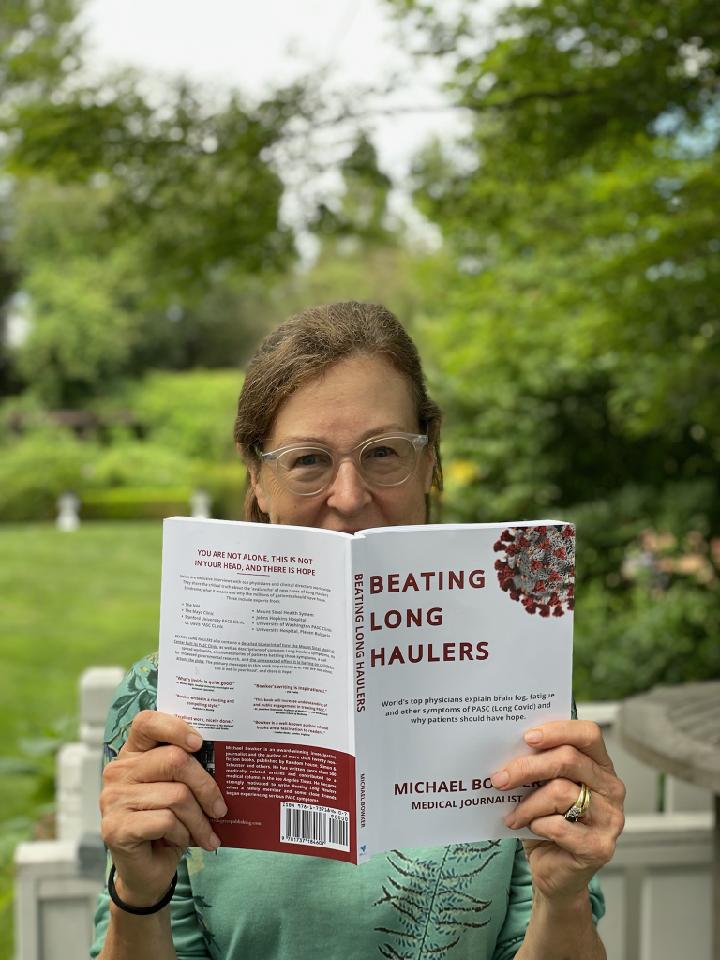
Beating Long Haulers Syndrome: Light at the End of a Long Haul

Beating Long Haulers Syndrome is a book for anyone who has lingering symptoms of COVID-19 or knows someone who has them. Written by journalist Michael Bowker, it’s an affirmation of the reality and potential life-changing properties of long haulers syndrome. 

“COVID-19 should clear the body after two weeks, but if you’re still suffering symptoms a month after the onset,” that’s an indication you have long haulers, Bowker told MedShadow during an interview. But it’s more complicated than symptoms that don’t go away. He added, “Many people might get cleared of symptoms for a month and then come back with symptoms that don’t match COVID, like chest pains for a few weeks, then brain fog and so on.” Bowker lists about 40 “common” symptoms and goes into more detail on 17 of them. 

Because long haulers syndrome is new, sometimes getting your doctors to see new symptoms as part of the syndrome can be difficult. Bowker interviewed hundreds of people for his book, and many told him about becoming depressed from the onslaught of seemingly unrelated symptoms and being passed from specialist to specialist. Some patients said doctors told them that the symptoms were all in their head caused by the “pandemic shut-in phase” that we all experienced in 2020. Added Bowker: “This book is important because the all-star lineup of doctors I interviewed for the book all say this has a biological basis. This is long haulers.” 

Long haulers is a term used mostly in the US, while long COVID is a common term in Europe, The US National Institutes of Health (NIH) has given the affliction the official name PASC, or Post-Acute Sequelae of SARS-COV-2 infection. The Long Covid Alliance estimates that no fewer than 3.2 million people in the US alone suffer from long hauler syndrome and that number grows every day as more people fall ill and recover from COVID-19. 

Bowker is an investigational journalist, and this book shows it. After a couple of introductory chapters giving the background on long haulers syndrome, Bowker commits the majority of the rest, first to interviewing patients experiencing long hauler syndrome, and then to the doctors who are making real inroads into understanding and treating it. 

Bowker also reports on doctors and medical centers that are studying long haulers, some that are conducting clinical trials that readers might try to join. Mount Sinai Hospital in New York City has created an app to help patients track the effects of PASC and has assembled  teams of about eight specialists who work together with patients to coordinate care. Bowker says he hopes this is the future of medicine. If there is a silver lining to the pandemic, Bowker states, “It is that COVID is an open current to create change in how we treat people.” That could lead to healthcare in which doctors work together sharing information and tying together disparate symptoms to cure underlying causes of illness.

Beating Long Haulers Syndrome is filled with help, suggestions and hope for those dealing with PASC. It’s a great resource for anyone whose healthcare provider isn’t offering the care needed. On Bowker’s website, updates through 2021 can be found. 

The post Beating Long Haulers Syndrome: Light at the End of a Long Haul appeared first on MedShadow.


Original post here: Beating Long Haulers Syndrome: Light at the End of a Long Haul

An Expert Guide to Safer, Smarter, Supplement Use

On May 13th, MedShadow is hosting a live webinar with an integrative psychiatrist and a clinical pharmacist to answer the questions most sup...